
NakodaX

Situations · Data protection

How to protect CAD files shared with suppliers

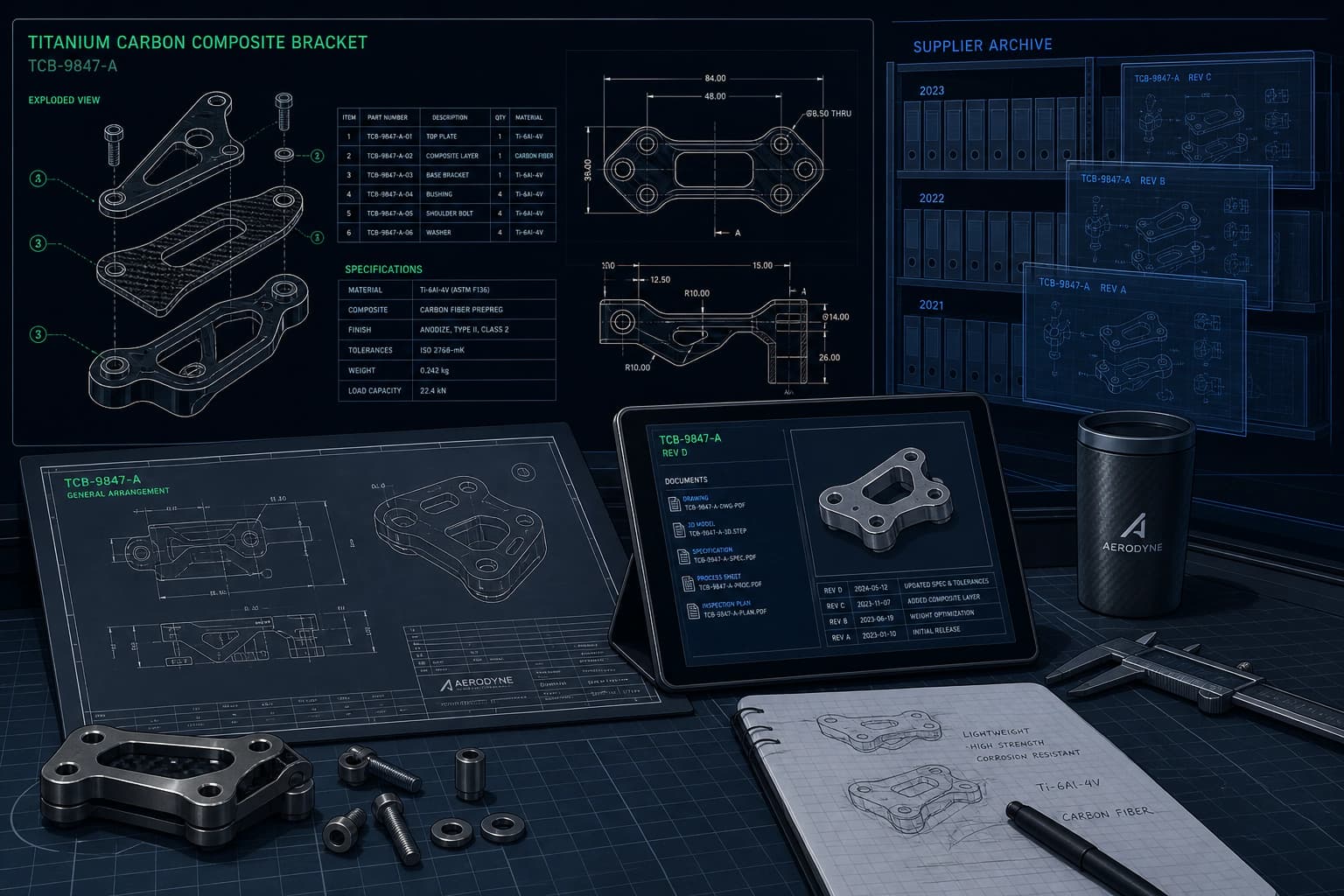
Engineering drawings and specifications accumulating at a contract manufacturer.

CAD files, specifications and BOMs sent to contract manufacturers accumulate in supplier systems for years and are a common origin of grey-market and lookalike products. Protection means sending production files that require ongoing permission to read, scoped per supplier, so switching manufacturers ends the old one’s ability to open anything.

Making things means sending your designs away

There is no version of contract manufacturing where the factory does not receive the design. They need the CAD files, the specifications, the bill of materials, the tolerances, the finish notes and the test criteria.

Which produces the uncomfortable identity at the centre of hardware: everything a factory needs to build your product is everything anyone needs to build your product. There is no subset that is sufficient to manufacture and insufficient to copy.

Files accumulate at suppliers for years

A supplier relationship is not one transfer. It is revision A, then B, then C, then the tooling drawings, then the packaging spec, then the updated tolerance after the first production run.

Over three years that is hundreds of files, spread across their engineering team’s workstations, their quality system, their tooling partner, and whatever they sent to the sub-supplier who makes the enclosure.

Then you move production, for cost or capacity or quality. Your relationship ends. The archive does not.

Lookalikes start from your files, not from reverse engineering

The assumption is usually that a copycat product begins with someone buying your product and taking it apart. That happens, and it is slow, expensive and imprecise.

The faster route is the one you supplied. A grey-market run on the same line after hours, or a competitor’s product that matches your tolerances a little too exactly, generally traces back to the exact files you sent, still sitting in a supplier’s system.

It is worth being clear-eyed: that supplier is often also quoting for your competitors, using engineers who have your drawings open on their second monitor.

Per supplier, for as long as they are making it

Production files sent under data protection are readable while the relationship is live, scoped to each supplier separately.

Move production and the old supplier’s copies stop opening, across every revision you ever sent. The new supplier gets their own access. A sub-supplier gets only what they need for the part they make.

Their engineers open the files in the tools they already use, on the same schedule. The step you are adding is at setup, once, and it is the only thing you are asking of them.

The next product never joins the archive

The forward-looking version matters more than the cleanup. Every design you send from now on has an end date attached to a commercial relationship rather than to nothing.

That changes how freely you can quote. Sending drawings to three factories for a competitive quote is currently a permanent disclosure to two companies that will not win the work.

What changes

Production files are readable while the relationship lives, per supplier. Change manufacturers, and the old one’s copies stop opening. Your next product’s drawings never join a permanent archive you do not control.

access ended

Related questions

How do you protect CAD files shared with suppliers?
Send production files under ongoing permission, scoped per supplier, so they are readable while that relationship is active. Switching manufacturers ends the previous supplier's ability to open anything you ever sent, including every earlier revision.
How do you prevent a contract manufacturer copying your designs?
You cannot prevent a factory reading files it needs to manufacture, so the control is temporal rather than absolute: they can read them while they are making your product and not afterwards. That removes the permanent archive that grey-market runs typically originate from.
Where do grey market products come from?
More often from the original design files than from reverse engineering. Files sent to suppliers accumulate across engineering workstations, quality systems and sub-suppliers, and persist long after production moves elsewhere.

This one, or one very like it

Data protection. Start where the problem actually is.