
NakodaX

Situations · Document protection

How to send an investor deck you can take back

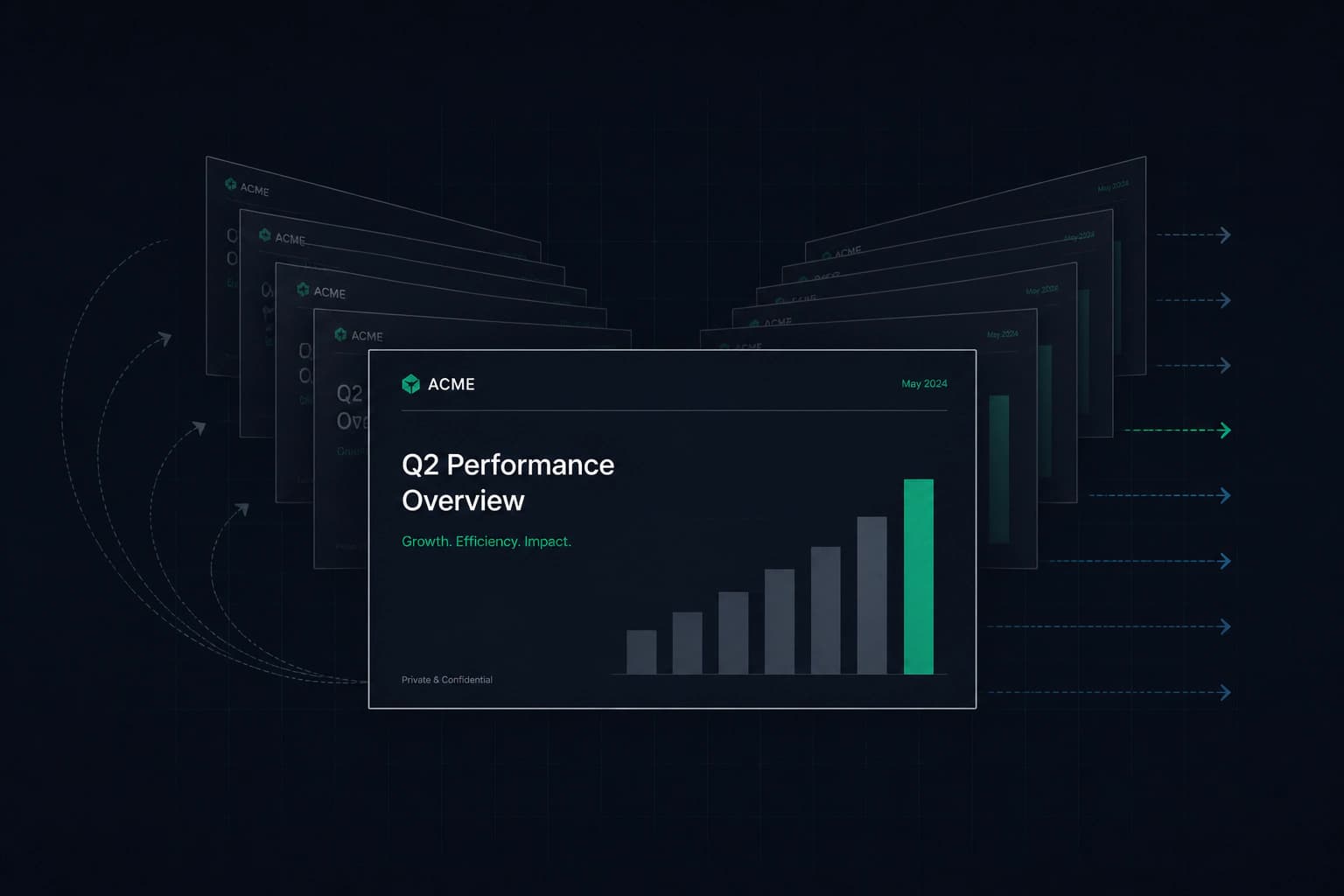
An investor deck multiplying into copies as it is forwarded inside firms.

Once a pitch deck is emailed, it is forwarded inside each firm to analysts, associates and partners, and kept by the firms that pass. You cannot unsend an attachment. You can send the deck as a controlled link instead, see who opens it, and revoke access for firms that pass.

Forty firms is not forty readers

A seed round means a list. Forty firms, maybe sixty, each one getting the same attachment: your plan, your numbers, your customers, your read on the market and on the people already in it.

Then the deck starts moving. An associate opens it and forwards it to the partner who covers your space. The partner forwards it to two colleagues for a second opinion. Somebody drops it in the shared folder for Monday’s pipeline meeting. An analyst pulls it into a comparison against three other companies doing something adjacent.

None of that is unusual and none of it is wrong. It is how a firm evaluates anything. But the arithmetic is worth sitting with: forty firms is rarely forty readers. Five people per firm is conservative, and it puts your strategy in front of two hundred people you did not choose, at institutions you will never audit.

The firms that pass are the ones to think about

Most of them will pass. That is the whole shape of fundraising, and no founder should take it personally.

The part worth taking seriously is what a pass leaves behind. A firm that says no still holds your revenue, your margins, your churn, your roadmap and your view of the competitive landscape. Many of them have money in companies that compete with you, or will next year. Some of them will be asked, six months from now, to form a view on a competitor of yours, and the most detailed document in the room will be the one you sent.

Nobody is behaving badly in this story. Your deck is simply a permanent, searchable artefact sitting in the document systems of dozens of companies whose interests do not match yours, and you have no way to reach any of it.

You cannot unsend an attachment. You can send something else.

An emailed PDF is a copy. The moment it lands it belongs to the recipient’s world: their laptop, their cloud storage, their backups, their colleagues. There is no version of email where you get it back.

A protected link behaves differently. The deck is still a file and it still opens like one, but opening it asks your permission first, every time, quietly, in the background. The investor clicks and reads. Nothing is installed, no account is created, no password is invented and immediately forgotten.

Because permission is checked on every open, you can withdraw it. Close the round, or write off the firms that passed, and their copies stop opening. Not just the copy you emailed. The one that was forwarded to the partner, the one in the shared folder, the one an analyst downloaded in March.

You also find out who actually read it

The quieter benefit is that you stop guessing. You can see which firms opened the deck, when, and how many times.

A firm that opened it four times in two days is a different conversation from a firm that never opened it at all. Founders normally run a process blind, reading tone in email replies. Read data is not a strategy on its own, but it tells you where to spend your follow-ups.

Different investors, different decks, one file

Investors do not all need the same thing. An early conversation does not need the cap table. A strategic investor does not need your detailed hiring plan. A firm you know is close to a competitor does not need your pipeline by named account.

Cutting a separate deck for each of those is work nobody has time for, so in practice everyone gets everything.

Partial sharing removes the choice between effort and over-sharing. You send the same deck, and each recipient’s version contains only the slides you chose for them. What you leave out is not blacked out or marked confidential, which invites exactly the curiosity you were trying to avoid. It genuinely is not in the file they receive.

What this does not do

It does not stop someone photographing a screen, and you should be suspicious of any product that says otherwise. Determined copying of what is on a display is not a solvable problem, and pretending it is costs more credibility than it wins.

What it does solve is the ordinary case, which is also the common one: a document that keeps working for everyone who ever received it, long after the reason for sending it has gone. That is not a security failure. It is just how files behave, until you send a different kind of file.

What changes

The deck is a link. You see who actually opened it, and for the firms that passed, you cut access the same day. The version that was forwarded internally stops opening too.

And when different investors should see different things, send each one only the slides that matter. The cap table is not hidden from the rest. It simply is not in their file.

access ended

Related questions

How do I send an investor deck I can take back?
Send it as a controlled link rather than an attachment. The deck opens only while you allow it, so when a firm passes or the round closes you withdraw access and their copies stop opening, including copies that were forwarded internally. Investors need no account and install nothing.
Who sees my pitch deck inside a VC firm?
Usually far more people than you sent it to. A deck typically reaches an associate, the partner covering your sector, colleagues asked for a second opinion, and the firm’s shared pipeline folder. Assuming five readers per firm is conservative, so forty firms is closer to two hundred readers.
Can I unsend a pitch deck?
Not if you emailed it as an attachment. A sent file is a copy in someone else’s control, and recall features only work inside a single organisation’s mail system. The alternative is sending a file that checks your permission each time it is opened, which you can withdraw at any point.

This one, or one very like it

Document protection. Start where the problem actually is.