
By Pallav Boonlia
Founder, NakodaX ·

NakodaX blog/Document Protection·4 min read
A normal PDF cannot be taken back once it is sent. A protected one can. Here is what revoking access actually does, and what it does not undo.
By Pallav Boonlia
Founder, NakodaX ·
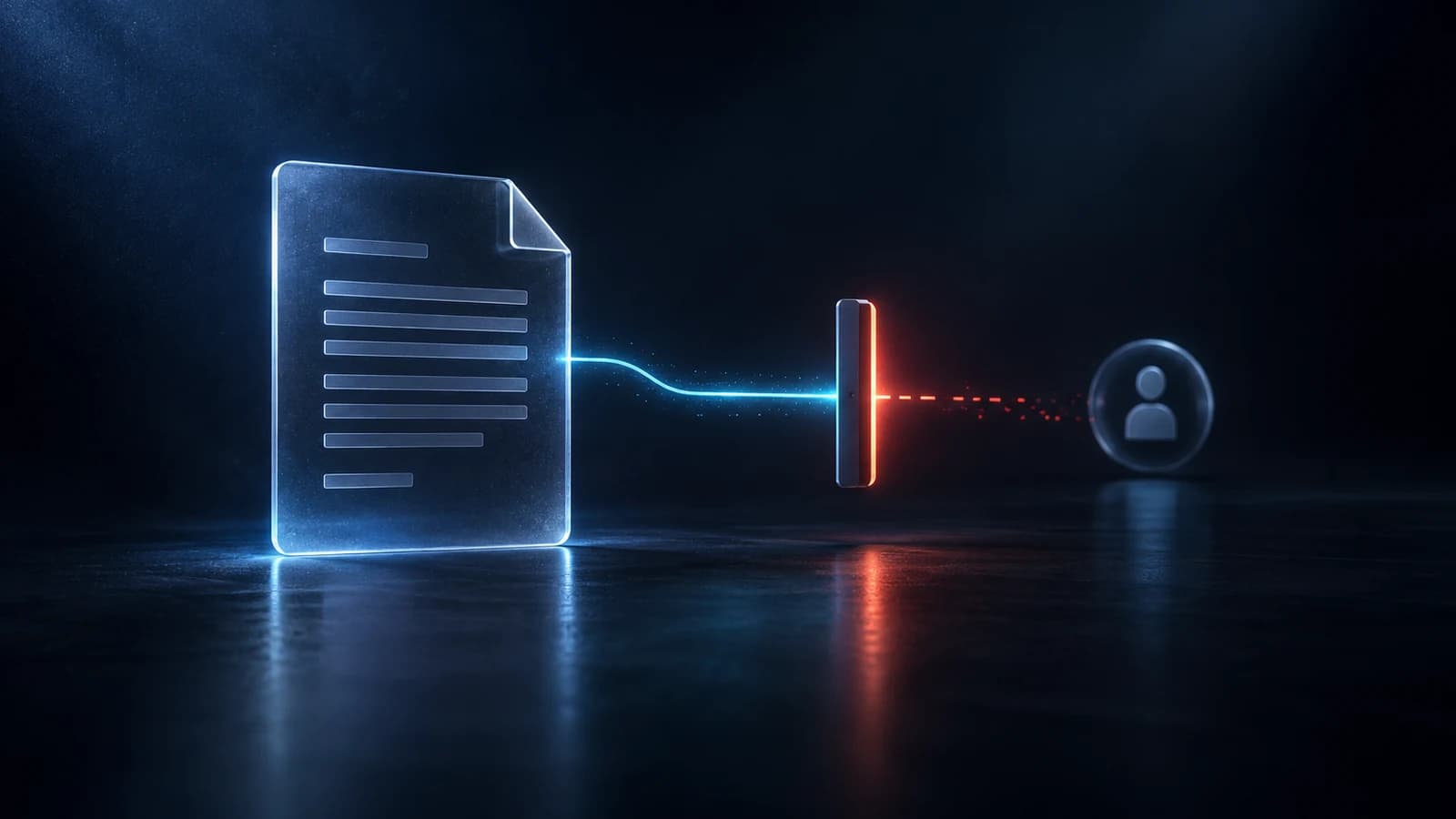
Revoking access stops the next opening. It does not undo the last one. That is the honest way to describe what this does.
You send a proposal to a partner on a Tuesday. Two weeks later the deal falls apart, or they choose someone else, and somebody on your team asks the question everyone eventually asks. Can we get that file back?
The honest answer depends on what you actually sent. If it was an ordinary PDF, no. Once it left your inbox, it belonged to whoever received it. If it was a document you protected before sending, then yes, in a real way, though maybe not the way people imagine.
People talk about revoking access as if it erases the past. It does not. It changes what happens the next time someone tries to open the file, not what already happened.
An ordinary PDF or Word file is whole in itself. The moment it lands in someone's inbox, they have a full, readable copy sitting on their own computer. From that point on, the file is theirs to keep, forward, or store however they like.
There is nothing built into the file that lets you reach into it later. Deleting your own copy, turning off a shared link, or asking someone nicely to delete it does nothing to whatever they already downloaded or forwarded before you asked.
That is not a weakness in any particular app. It is simply what sending a file has always meant.
A protected document works differently from the start. Before it ever leaves your browser, the content inside is locked. What your partner receives is not the document itself. It is a container that checks for permission every time someone tries to open it.
When you revoke access, you are not reaching into their computer and deleting anything. You are changing the answer that permission check gives. The next time anyone tries to open that file, on any device, the check fails and the content stays locked.
That is really what people mean when they ask about revoking document access after sharing, or ask whether a tool offers document DRM. It comes down to timing. Revoking access does not undo the openings that already happened. It stops every opening after that point.
It cannot make a person forget what they already read. If your partner opened the proposal and remembers the price you quoted, revoking access will not erase that from their memory.
It cannot undo a screenshot taken before you revoked, or a photo of a screen. No product in this space, ours included, can honestly promise otherwise. Anyone who tells you it can is stretching the truth of what a technical control can do to a moment that has already passed.
What it does stop, reliably, is the quiet, everyday kind of exposure. The file left sitting in a downloads folder. The copy someone forwards to a colleague without thinking twice. The version opened again six months later by someone who no longer has a real reason to see it. Most leaks come from moments like these, not from someone determined enough to take a screenshot.
A deal falls through. Your pricing and your approach do not need to keep floating around after the decision is made.
A working relationship ends. A contractor, an agency, or a vendor whose contract is over should not still be able to open what you sent them while you were working together.
Someone gets the wrong file. Access sent to the wrong person, or a mailing list that changed after you hit send, can be fixed after the fact instead of only guarded against before it.
An ordinary document is gone the moment you send it. A protected one stays yours to close, whenever you decide, on every copy, starting the next time someone tries to open it.
Related product
Protect documents before sharing. Control who can open them, what they can see, when access ends and how protected documents are used.
See how it works