
NakodaX

Situations · Document protection for files, data protection for feeds

How to share only part of a file with a partner

A full data export reaching a partner who needed only one part of it.

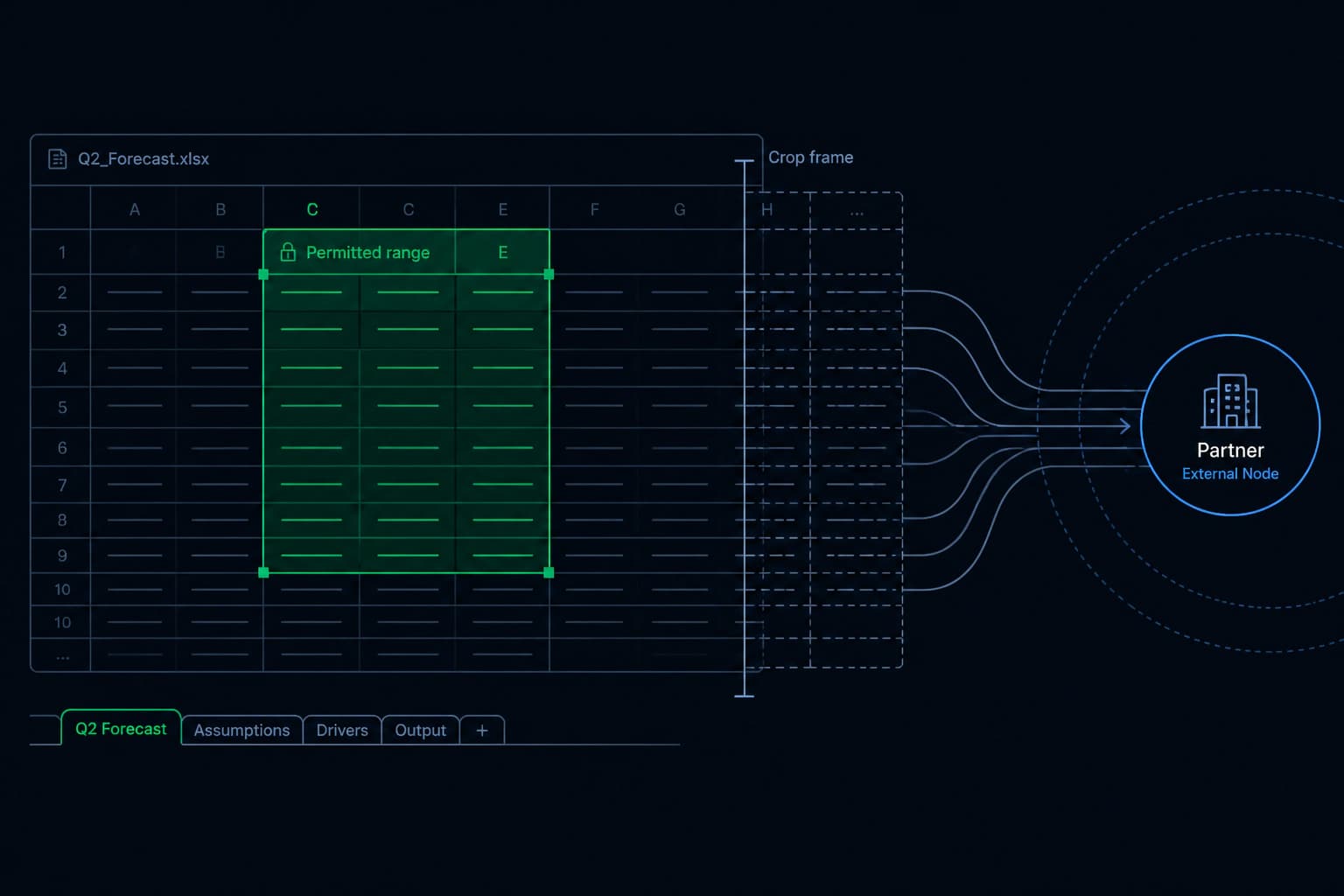
Most partner data leaks are over-shares, not thefts: the partner needed a slice and received the whole export because cutting it manually every week is impractical. The fix is sharing files where the recipient’s copy contains only the permitted sheets or sections. The rest is not hidden; it is not in their file.

Over-sharing is an effort problem, not an ethics problem

The partner asked for their region. The export produces every region. Splitting it means opening the file, deleting the rows that are not theirs, checking you have not broken a formula, saving a new version, and naming it something you will regret in six months.

That is ten minutes. Every week. For each of eleven partners.

So it does not happen. The whole file goes, week after week, and a partner who needed one region can see every region’s margins, every account name, and the performance of the competitor sitting next to them in your channel.

What they can see, they will eventually use

Nobody sets out to misuse it. But a partner who can see your margin on their product line will negotiate differently. A reseller who can see another reseller’s numbers will ask why their terms are worse.

None of that is bad faith. It is the predictable result of giving somebody information and expecting them to un-know it.

Absent beats hidden, and it is not a small difference

The usual attempts at a fix are hiding and redacting: grey out the rows, black out the columns, protect the sheet with a password everybody in the industry knows.

All of those tell the recipient exactly where the interesting material is. A blacked-out figure is an invitation. A hidden sheet is two clicks from visible.

Sharing only part of a file means the rest is not in the file they receive. There is nothing to reveal, nothing to unhide, and nothing to be curious about, because the document they hold is genuinely the document you meant to send.

One export, a different view per partner

The practical shape is that your export job does not change. You produce the same file you always produced, on the same schedule.

What changes is that each partner’s access covers only the sheets, sections or slices you assigned them. Eleven partners, eleven views, one file, and no manual cutting on a Monday morning.

For files it is document protection doing the work. For scheduled feeds into a partner’s systems it is data protection. Most companies discover they need both, because the same numbers leave in both shapes.

What changes

Send the file, and they receive only the sheets, sections or slices they should see. The rest is not hidden behind a warning. It is not in their file at all. One export, a different view per partner, no manual cutting.

access ended

Related questions

How do you share only part of a file with a partner?
Grant access to specific sheets, sections or pages, so the recipient's copy contains only what you assigned. The remainder is not hidden or redacted; it is not present in their file at all, which means there is nothing to uncover.
Can I share one sheet of a spreadsheet externally?
Yes. One export can serve many partners with a different view each, without producing a separate cut-down file per partner. The underlying export job does not need to change.
How do you stop over-sharing data with vendors?
Remove the effort that causes it. Over-sharing almost always happens because manually cutting a file for each recipient every week is impractical, so per-recipient scoping applied at the point of sharing solves it more reliably than a policy asking people to be careful.

This one, or one very like it

Document protection for files, data protection for feeds. Start where the problem actually is.