
NakodaX

Situations

What happens to files after you share them

42 real situations across documents, data and source code. Find yours and see what changes with NakodaX.

Document Protection

21 situations

Keep control wherever documents are shared

A protected film reel traveling from a sealed editing case to approved review points.

Sharing a first cut without leaving copies

The cut was for the producer, the board, and the campaign team. By Friday, it lived in every reviewer’s download folder.

  • Creative studios
  • Marketing and agencies
Today

A first cut needs fast review. Production, legal, the board, a distributor, marketing and an agency may all need to watch it before the next edit starts.

The usual way is a big upload or download link. Each review leaves another lasting copy of the work, often before the release date, the approval or the campaign plan is settled.


With NakodaX

You share the cut as protected video. Approved reviewers stream it in the browser, with no account, and you decide who can open it and until when.

When the review window closes, the cut closes with it. The next version does not leave the old one open.

A glass monitor showing an abstract campaign visual, with thin green light reaching three separate glass viewing panes.

Sharing campaign creative before it launches

The concept went to the client, two agencies and a media partner for sign-off. The campaign changed in March. The old concepts are still in everyone’s folders.

  • Creative studios
  • Marketing and agencies
Today

A campaign is reviewed by more people than the team that makes it. The client, the creative agency, a media partner and a legal reviewer each need to see the film, the key visuals and the deck before anything is approved.

The ordinary way to do that is an email attachment or a download link. Every round of changes adds another copy, and a concept that was dropped months ago stays in an inbox, a shared drive and an agency archive.

With NakodaX

The creative goes out as a protected share. Each reviewer opens the video, images or PDFs in the browser, with nothing to install, and the sender sets who can open it and until when.

When the campaign is approved, changed or cancelled, the sender ends access to that round. The next round is a new share, so no old concept stays open by default.

A glass agreement forming a gate in front of a protected document folder.

Requiring an NDA before sharing documents

You got the NDA signed. Then you emailed the product plans, source material, and commercial documents as ordinary attachments.

  • Startups and investors
  • Legal and HR
  • Software companies
Today

A founder shows a product to a prospective client. A product owner shares a roadmap with a vendor. A team sends designs and specifications to a freelance contractor. The NDA comes first because it should.

Then the protected conversation becomes an ordinary attachment. The recipient has signed a legal agreement, but the copy can still be forwarded, retained after the discussion, or used as a reference by a future competitor.

With NakodaX

The NDA becomes the gate to the material. The intended recipient verifies their email, signs the agreement, and then opens the protected share. The sender has the signed record and can define the access window for the actual files.

When the discussion, project, or vendor evaluation ends, the sender can revoke the protected access. The NDA still carries the legal obligation. The files no longer rely on the recipient remembering to delete an attachment.

A set of glass lesson tiles connected to a calendar ring marking a defined access period.

Ending course access when a subscription ends

The learner paid for six months of lectures and replays. The downloads are still being watched two years later.

  • Training and publishing
Today

Education businesses sell access to recorded lectures, workshops, workbooks and case studies for a set cohort or subscription period. The learning has a clear start and a clear end.

Ordinary video links and downloaded files do not share that end date. They move into personal folders, group chats and old bookmarks, where the course keeps teaching long after the subscription ends.

With NakodaX

You share the lectures and workbooks as protected video and documents, with an end date that matches what the learner paid for. Learners open them in the browser, with no account, while their access is active.

When the cohort or subscription ends, the material stops opening. For a renewal, you share the library again with a new end date.

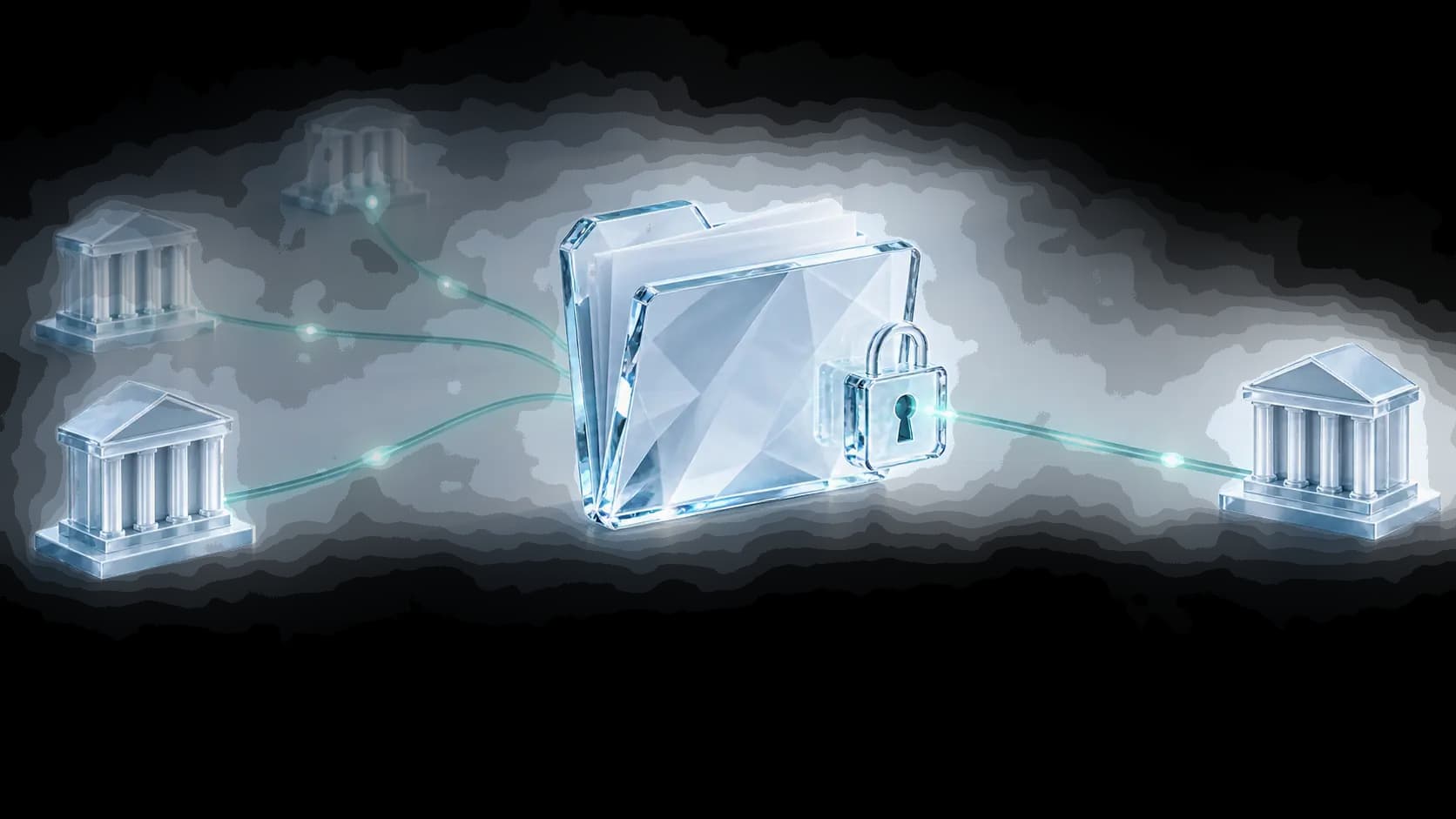
A loan file fans out to a row of small bank buildings; the one lender that made the loan glows green, and the others are grey with closed padlocks.

Lenders you didn’t choose keep your bank statements

You asked five lenders for a loan. One said yes. The other four still hold your bank statements, tax returns and forecasts.

  • Finance and insurance
Today

You need a business loan, so you ask several lenders at once. Each one asks for the same pile of papers: bank statements, tax returns, management accounts, invoices, customer contracts and forecasts. Sometimes they also ask about the owners and their personal guarantees. A broker may send the whole file to every lender to compare offers.

One lender makes an offer you like. The others get a polite no. But each of them still has your file, in an email, a shared folder or a loan system. Closing the application does not close the copies.

With NakodaX

You send the file as protected documents, one share for each lender, with an NDA first if you want one. Each lender opens it in the browser and reads what it needs for a credit decision. You see who opened it and when.

When you choose a lender, you end access for the others. Their copy stops opening, even one that was downloaded. The lender you chose keeps its access, or you give it an end date.

A protected glass portfolio balanced over a fine line, with a teal completion point on the other side.

Delivering final files before the invoice is paid

The work is finished. The client wants the source files. The invoice is due next week, and the leverage disappears the moment you deliver.

  • Creative studios
  • Marketing and agencies
Today

Designers, photographers, editors, agencies and consultants all reach the same moment. The work is finished, and the client needs the final files to launch, print or publish. The invoice is due at the same time.

Send ordinary files before the payment clears and the client can use them straight away, paid or not. Hold everything back and the finish becomes tense.

With NakodaX

You send the finished work as protected files. The client reviews it in the browser while the invoice is processed, without getting a permanent copy too early.

When the invoice is paid, you send the files in the form you agreed. If the work is not approved, or the project ends, you end access in one click.

A data room releasing documents outward to bidders, the furthest copies beyond reach.

Data room documents after a deal falls through

Three bidders downloaded your data room. Two walked away, and one of them competes with you.

  • Startups and investors
Today

Financials, contracts, the customer list, the cap table. All of it went to three bidders during diligence, because that is what diligence is.

Then two of them passed. The data room closed, and everyone was politely asked to destroy their copies. But the files were downloaded weeks ago, by bankers, lawyers and analysts, onto laptops and into systems you will never see. One of those companies decided not to buy you and to stay your competitor, holding everything.

With NakodaX

You run the data room with protected documents, and one NDA for the whole room. Each bidder reads in the browser, with no account, and you see who opened what.

When the deal ends, you close the room. Closing revokes every share, so every copy stops opening, including downloaded and forwarded ones. A bidder who drops out earlier can be removed the same day.

An investor deck multiplying into copies as it is forwarded inside firms.

Taking back a pitch deck after it’s forwarded

You sent the deck to forty investors. Count the analysts, associates and partners it was forwarded to. Now count the ones who passed.

  • Startups and investors
Today

A fundraise means sending your plans, your numbers and your customers to dozens of firms. Most of them will say no. Inside each firm, the deck is forwarded to partners and colleagues, saved to a shared folder and filed.
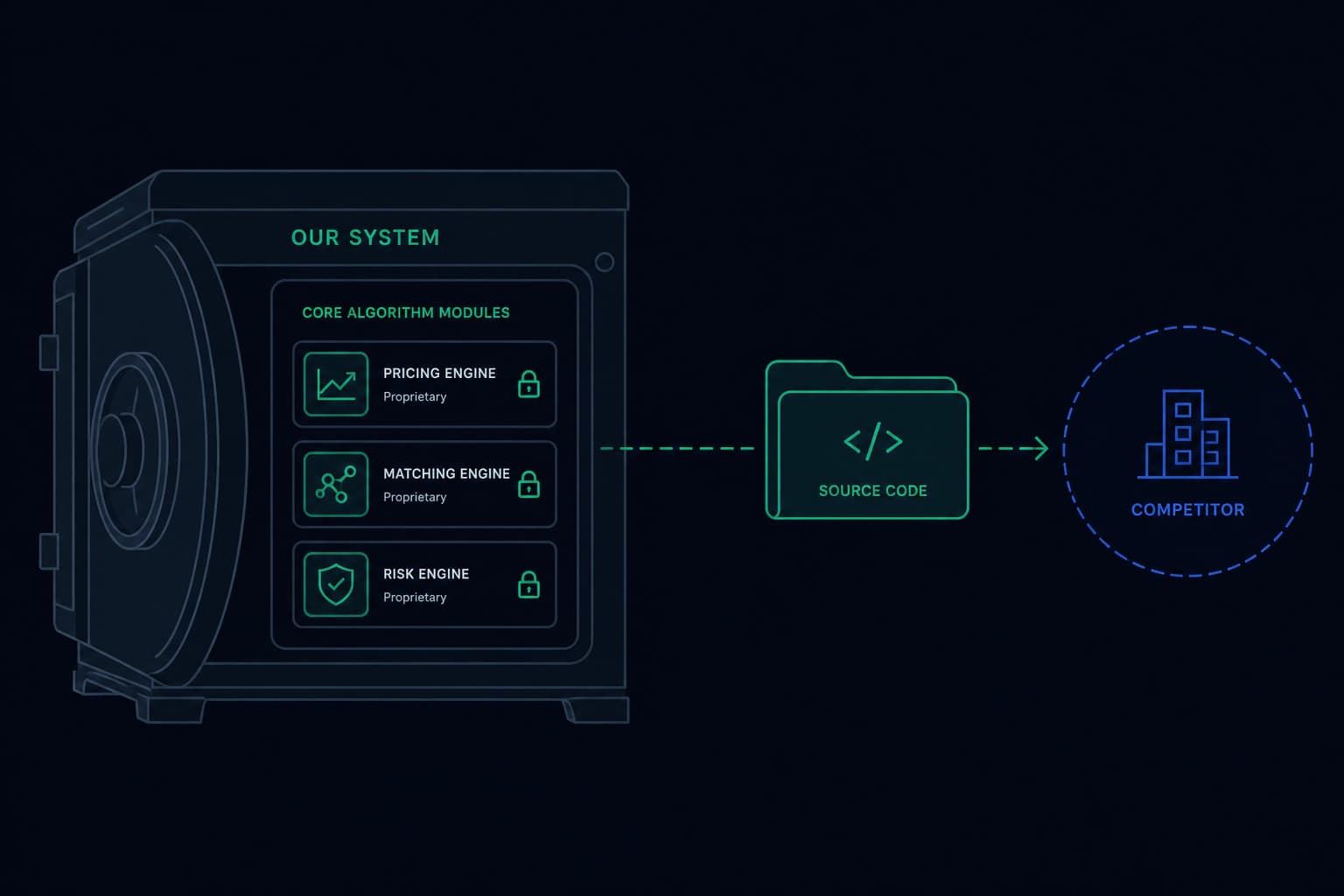
Some of those firms have money in your competitors. Nobody is doing anything wrong. That is just how email works.

With NakodaX

You send the deck as a protected file, with an NDA first if you want one. Investors read it in the browser with no account. You see who opened it, when and how many times.

When a firm passes, you end its access the same day. Copies forwarded inside that firm stop opening too. You can also send each investor only the slides that suit them. What you leave out is not in their file.

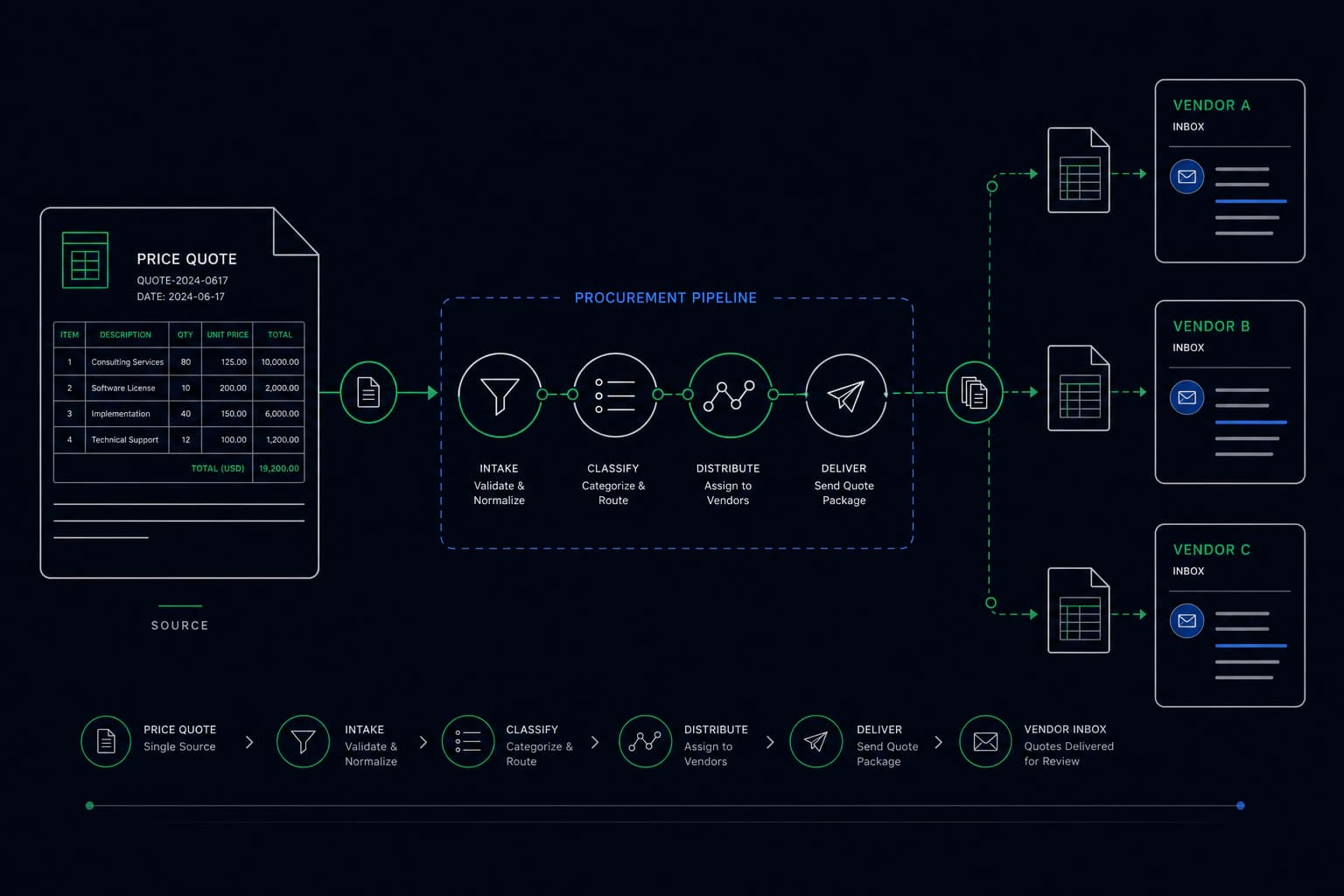
A price quote circulating from a buyer out to competing vendors.

Quotes forwarded to competing vendors

You sent one company your best price. By Thursday, three of their vendors had seen it.

  • Software companies
  • Manufacturing and suppliers
Today

Quotes, rate cards and proposals are the most forwarded documents in business, because forwarding them is how buyers negotiate. Your best price becomes the number everyone else is asked to beat.

It keeps circulating long after the deal closes, whether you won or not.

With NakodaX

You send the quote as a protected file, with an end date and a limit on how many times it opens. It is readable during the negotiation and stops opening after it.

If the buyer forwards it, the new reader shows up in your activity and has to ask for access. Next quarter's talks start from today's price, not your last number.

A submitted bid filed into a procurement archive alongside earlier proposals.

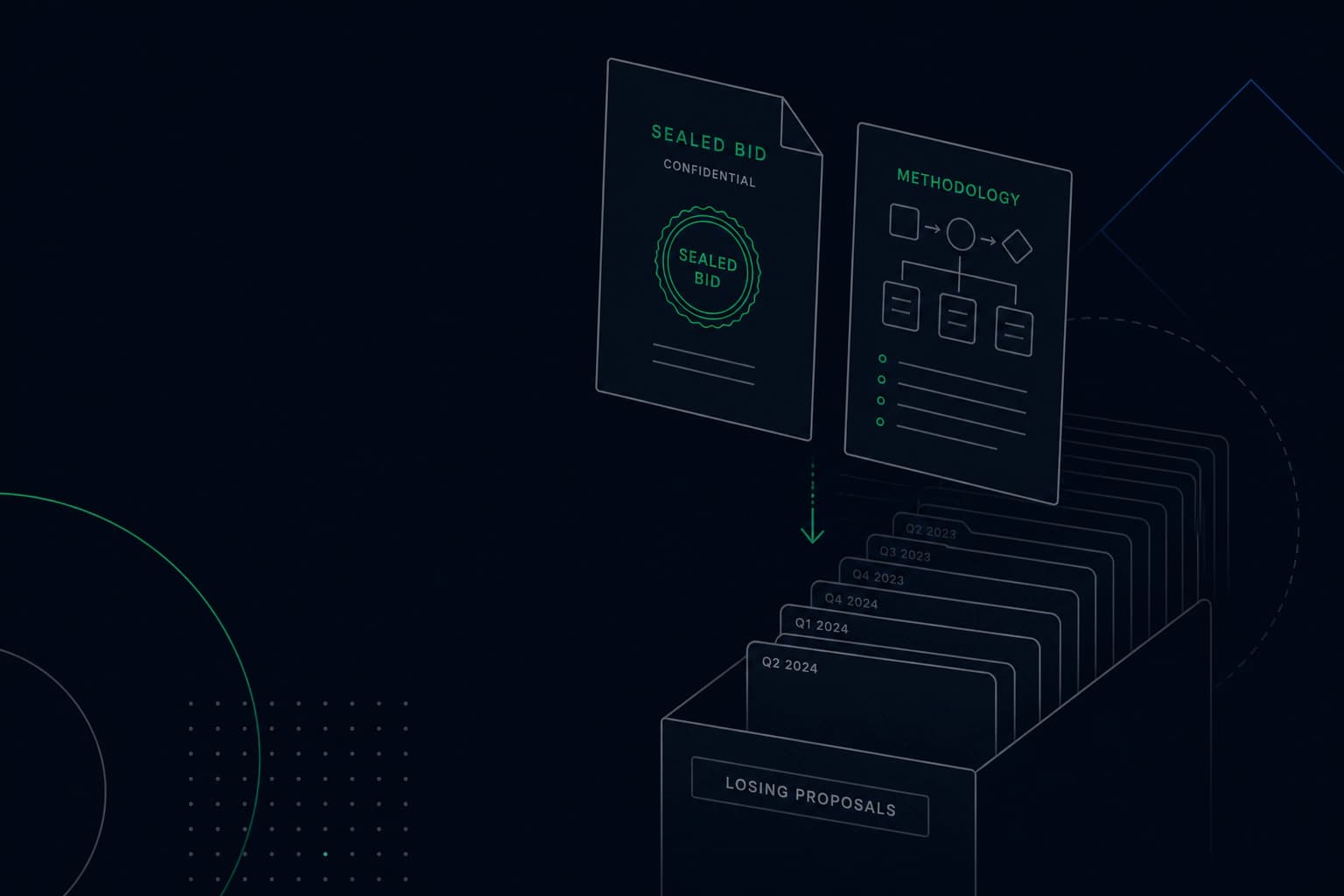
Bid documents after you lose a tender

Your bid held your pricing, your methodology and your references. The evaluation panel kept every losing bid it ever received.

  • Manufacturing and suppliers
Today

A tender asks for your best thinking in writing: your price, your delivery plan, your team and the way you actually do the work. You send it to a committee you have never met, at a company that is receiving your competitors' best thinking too.

Losing bids are not destroyed. They are archived, compared and read again when a similar project comes up. Your method becomes free advice, and your price becomes the floor for next year's talks.


With NakodaX

You send the bid as protected files, with an end date set to the award announcement. The committee reads it freely until then. After the decision, the documents stop opening.

Win or lose, your thinking stops circulating on the day the decision is made. If you win, you share what the delivery needs under a new agreement.

Four glass folders in a row holding the same creative brief; one glows green and open, three are frosted and closed.

Briefs held by agencies you didn’t pick

You briefed four agencies for the pitch. One won. The other three kept your strategy, your budget range and your launch date.

  • Marketing and agencies
Today

A pitch starts with a brief: the audience, the objectives, the budget range, the launch window and what your competitors are doing. To get strong ideas, you send it to several agencies at once.

A brief sent as an attachment stays with every agency. The ones that lose the pitch keep the strategy and the budget, and nothing stops them reading it again on the next pitch for someone else.

With NakodaX

The brief becomes a protected share behind an NDA. Each agency verifies its email, signs, and then opens the brief. The sender gets the signed record.

When an agency is not selected, the sender ends that agency’s access. The NDA still carries the legal obligation, and the files no longer rely on the agency remembering to delete them.

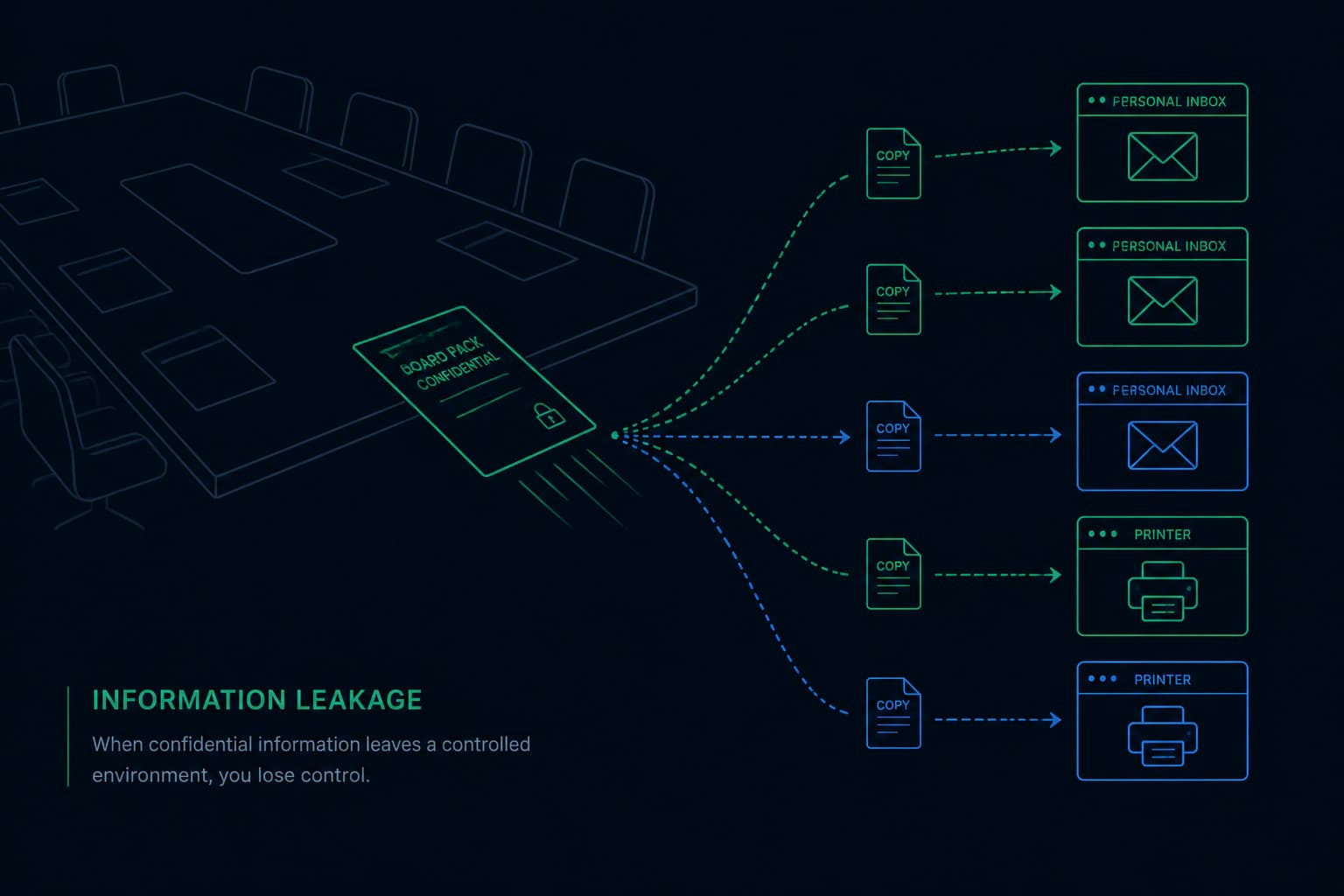
Board papers travelling beyond the boardroom table to devices outside it.

Board papers that travel beyond the board

Board papers are written for eight people. They get forwarded to assistants, advisors, and one director’s personal email.

  • Startups and investors
  • Legal and HR
Today

The board pack is the most candid document a business produces: real numbers, real risks, legal exposure and decisions about people. It is written for a named group of directors, and then it travels. To assistants who print it, to an investor's own committee, to a personal inbox because reading on a plane is easier.

When a director steps down, or an investor exits, every pack they ever received stays with them.

With NakodaX

You send each pack as protected files to the directors you named. You see who opened it before the meeting, and access ends after it.

When a director leaves, you end their access to the packs you sent them, and those copies stop opening.

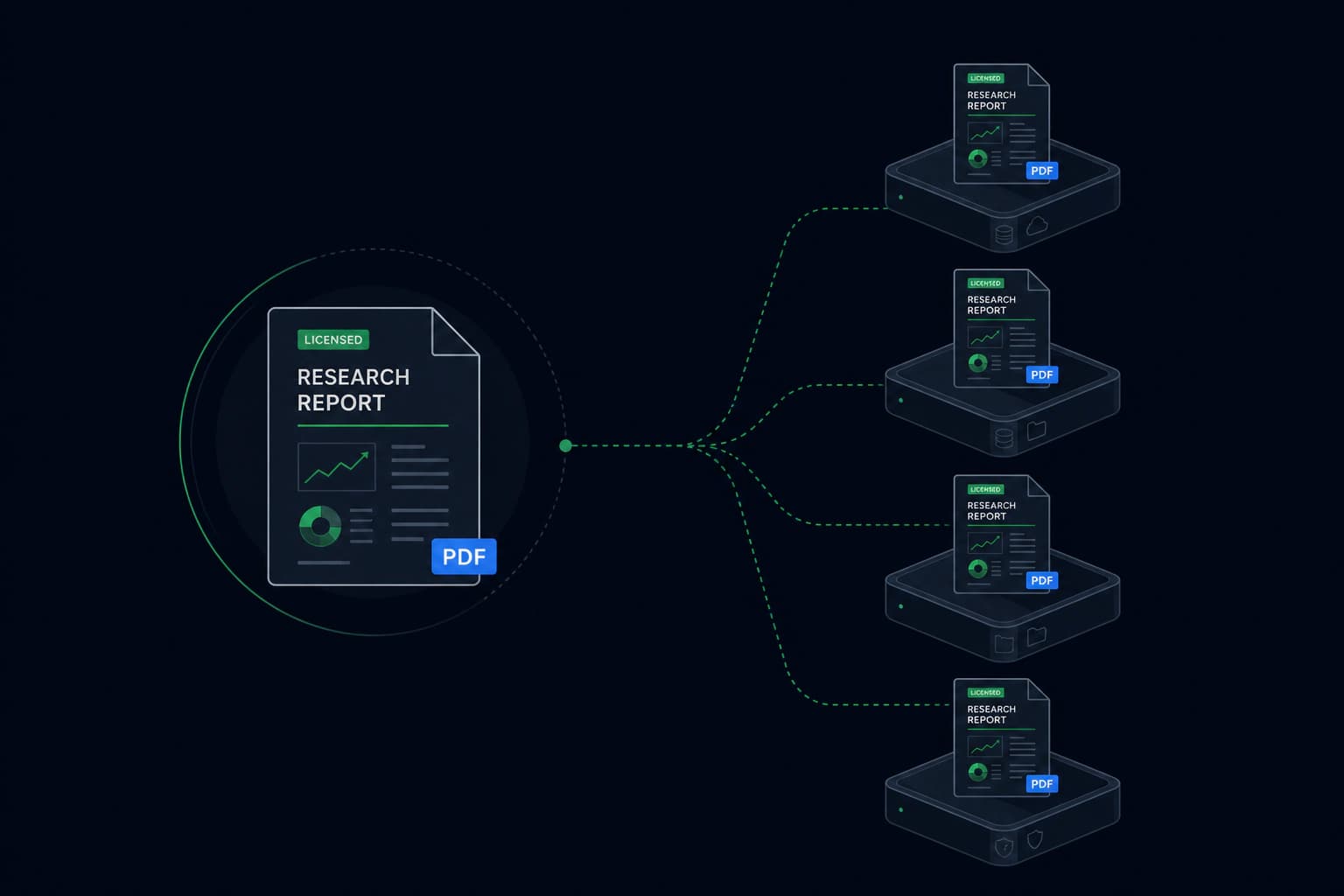
A licensed research report duplicating across several company drives.

Paid reports shared beyond the licence

You sell research. One client bought one licence. By month’s end the PDF was on four company drives.

  • Training and publishing
Today

You sell research, benchmarks or valuations. A client buys one licence for one reader. That reader forwards the PDF to the team, because that is helpful, and someone saves it to the department drive. By the end of the year, the whole department reads it.

You priced per reader and delivered to everyone. Nobody stole anything. A file has no idea how many people were licensed to read it.

With NakodaX

You send each report as a protected file to the readers on the licence. They read it in the browser with no account. You can set an open limit and an end date that matches the subscription.

If a report is forwarded, the new reader shows up in your activity and has to ask for access. You also see who opened each report and how often, so you know which clients should be on a bigger plan.

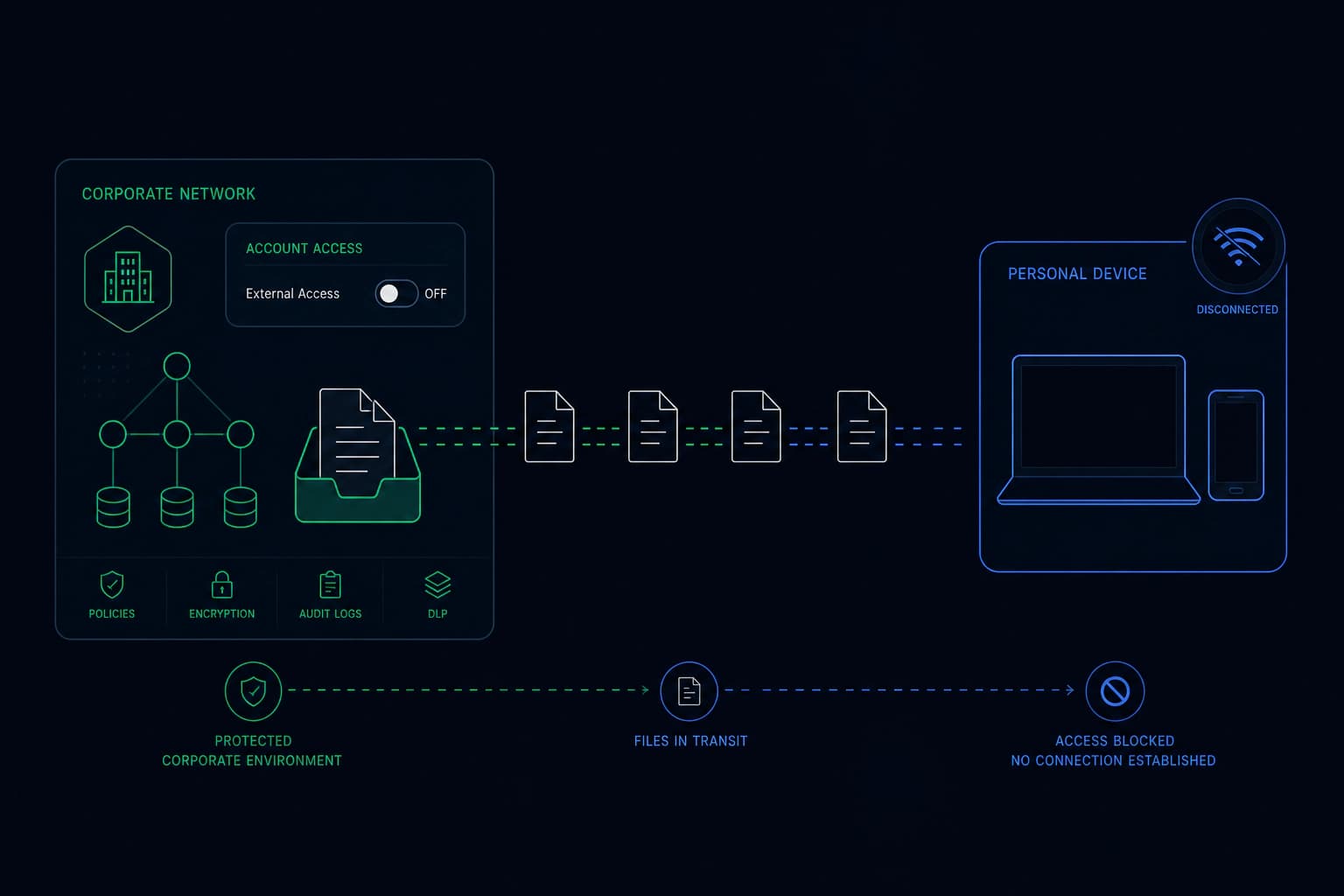
An emptied desk beside files still open elsewhere after a last working day.

Files a former employee can still open

People leave, and their accounts are closed in an afternoon. The files you sent to their email and personal devices stay open.

  • Legal and HR
Today

Offboarding closes accounts and collects laptops. But work does not stay in accounts. Over the years you send people files: the pricing model, the forecast, the brand files. Some go to personal email, some are saved to a phone, and some are forwarded on.

On the last day the accounts are closed. The files you sent are not. They stay open to that person, no matter where that person has gone.

With NakodaX

You send sensitive files as protected documents. When someone leaves, you end their access. The copy on their phone stops opening, and so does a copy they forwarded.

The people you still work with are not affected. Each person has their own access, so ending one person's access does not close the file for everyone else.

This covers the files you protected. A file emailed as an attachment in 2021 is still an attachment, so protect sensitive files when you first send them.

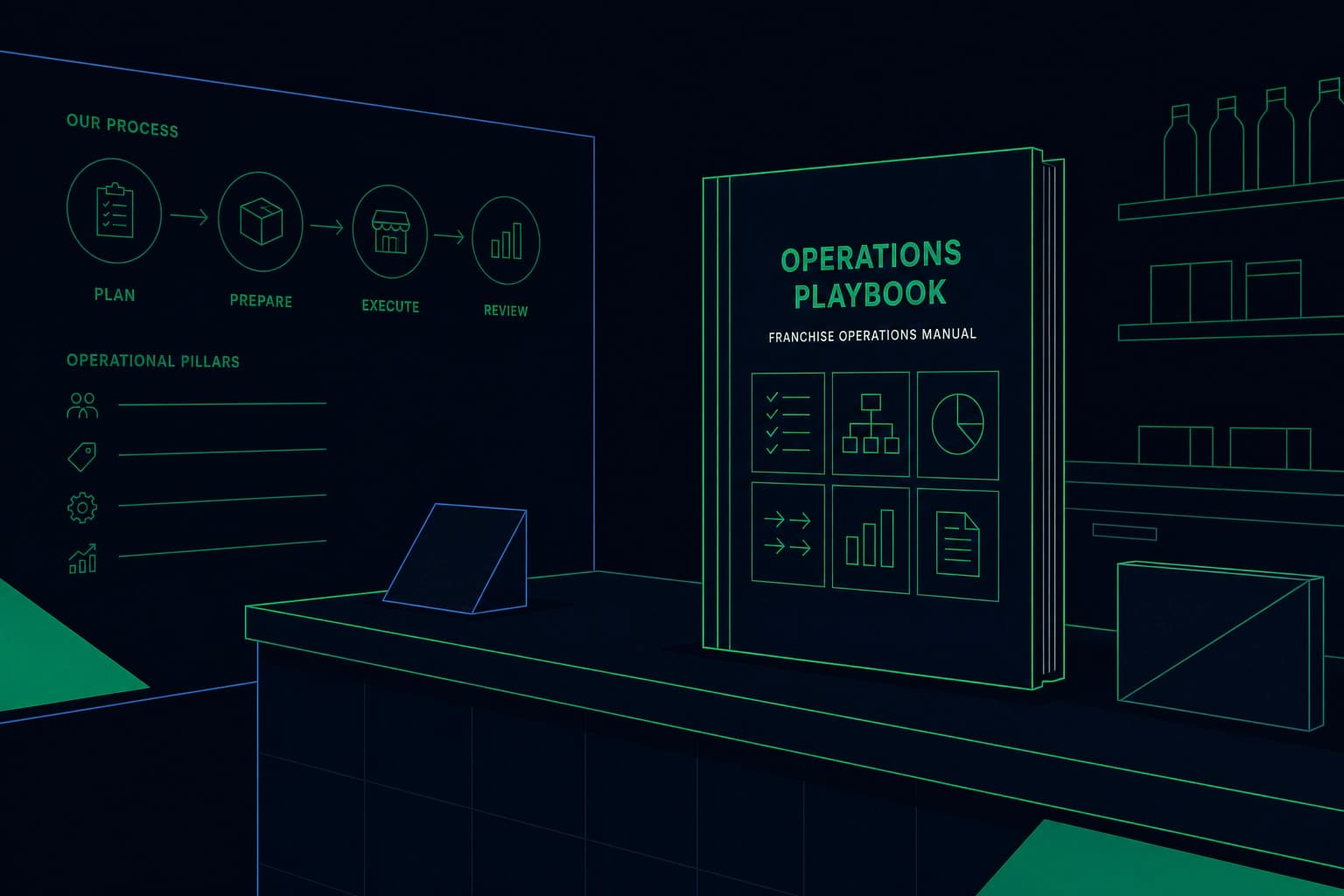
A franchise operations manual retained after the brand agreement ended.

Franchise manuals after the agreement ends

You gave a franchisee the manual: processes, recipes, supplier terms, training. They dropped your brand and kept your playbook.

  • Training and publishing
  • Also Data Protection
Today

A franchise runs on the operating manual: the processes, recipes, supplier terms and training that took you a decade to get right. Every agreement says the materials must be returned when it ends. Nobody has ever returned a PDF.

So the franchisee who leaves opens an independent shop across the road, running on your processes, your supplier terms and your training videos, without the fees.

With NakodaX

You send the manual, the training videos and the supplier lists as protected files, with an end date that matches the agreement. Staff open them in the browser, on a phone in the back office, with no account.

When the agreement ends, the files stop opening, and you can end access sooner in one click. What you licensed stays licensed for as long as you said.

Seen from above at a sunlit meeting table, a folder stamped Embargoed until 14 May goes to three advisers, a law firm, a bank and a PR agency, each copy marked with a green clock.

When a confidential plan goes to outside advisers before it is announced

A reorganisation, a policy change, a site closure. Consultants, lawyers and another department all need the papers before anyone else knows. The announcement comes and goes. The papers stay with them.

  • Legal and HR
  • Government and enterprise
Today

Every adviser gets the whole pack by email, and keeps every version after the announcement.

With NakodaX

The plan sits in a room with one NDA. Each adviser sees only their part, with their name on every page, and the room closes on the date you set.

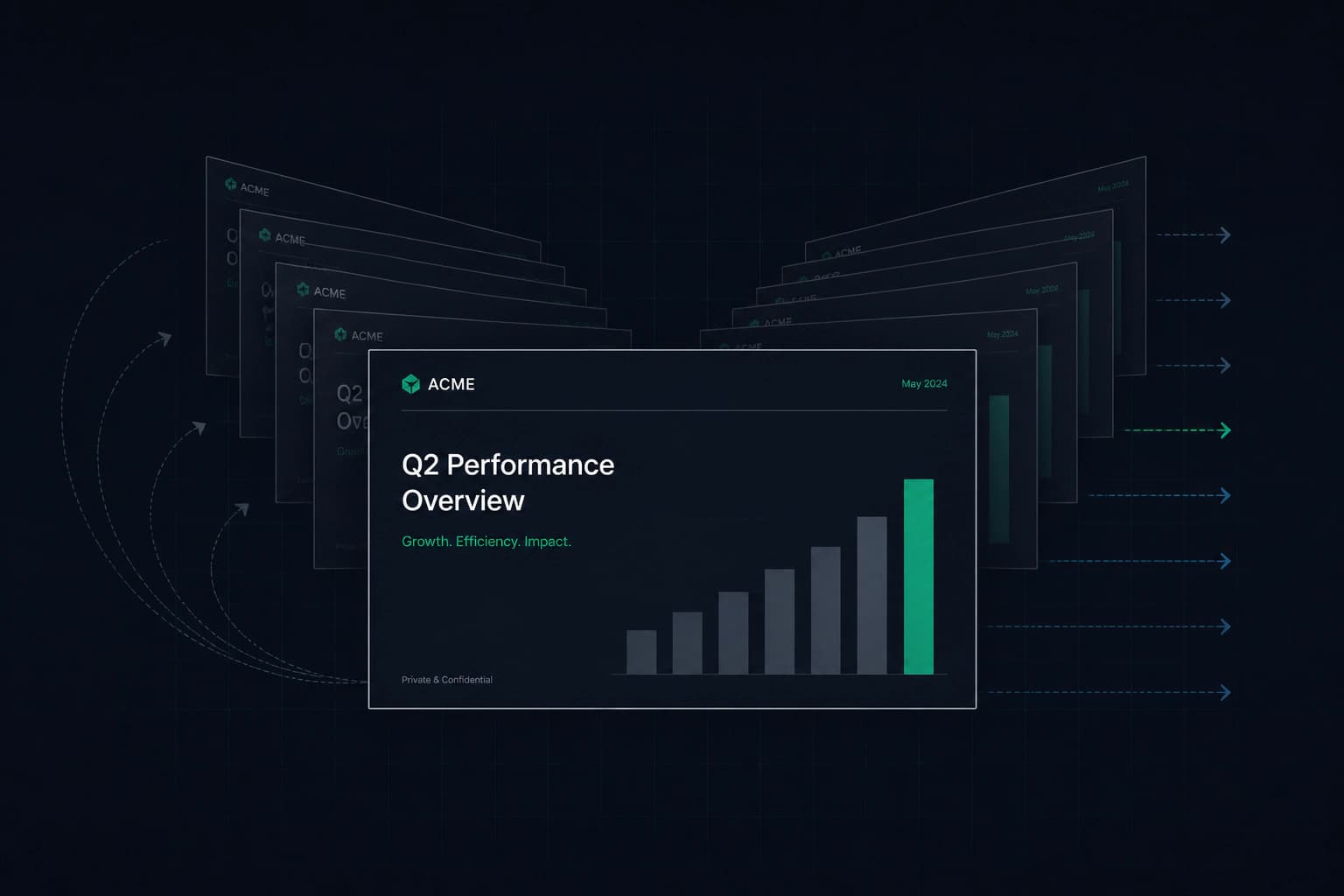
At a boardroom table, a CEO fans a stack of slides. Ten go into a locked folder for the board, and the rest travel along green dashed arrows to an employee, a partner and a group, marked 4, 3 and 3.

When a 20 slide deck has 10 slides for the board only

The CEO has one 20 slide deck. Ten slides are for employees and the public. Ten are for the board. The whole deck goes out, with a note asking people to ignore the second half.

  • Startups and investors
Today

Everyone who gets the deck can read the board slides, and so can anyone they forward it to.

With NakodaX

You choose the ten slides to share and send a real deck with only those. The other ten are not in the file. The board gets the full deck from the same original.

A large printed spreadsheet on a desk sends three smaller sheets, each with different rows highlighted and some columns greyed out, along green dashed arrows to three city skylines.

When each distributor should only see their own region

One analytics sheet holds sales, targets and margins for every city and state. Each distributor and agent needs only their own region. It goes to all of them whole.

  • Manufacturing and suppliers
Today

Every distributor sees the other regions, the price tiers and your margin.

With NakodaX

You save a selection for each region: the columns to leave out and a filter for the city or state. Each distributor gets a real spreadsheet with only their rows and columns.

Two pages on a meeting table: the original in a locked folder with three passages outlined in green, and a redacted copy with clean gaps and a green tick, which a man across the table receives.

When a PDF can be shared except for a few passages

A contract, a report or a case file has to go to someone outside. Most of it can. A price, a name and a few paragraphs cannot. A black box drawn over them often leaves the text in the file.

  • Legal and HR
Today

The passages are covered with black boxes in a PDF editor and the file is sent. The text under the boxes can still be selected and copied.

With NakodaX

You mark the passages in your browser and they are deleted from the file. The redacted copy goes to the people you name, until the date you set. The original stays with you.

A woman holds a bank statement and an ID card on a marble desk. Most of the lines dissolve into green particles, a location pin lifts off the card, and a man across the table receives the redacted statement.

When a lender needs three lines of a statement, not all of it

A lender asks for a bank statement and a photo of an ID. They need a few lines and a name. They receive every account number and transaction, and a photo that carries its location.

  • Finance and insurance
Today

The full statement and the original photo are sent. The other side keeps everything on them, including data that is not visible on the page.

With NakodaX

You mark what to remove. Text is deleted from the PDF, marked pixels in the image are destroyed, and the hidden data is stripped. The lender gets the redacted file until the date you set.

Data Protection

12 situations

Move controlled data to each recipient

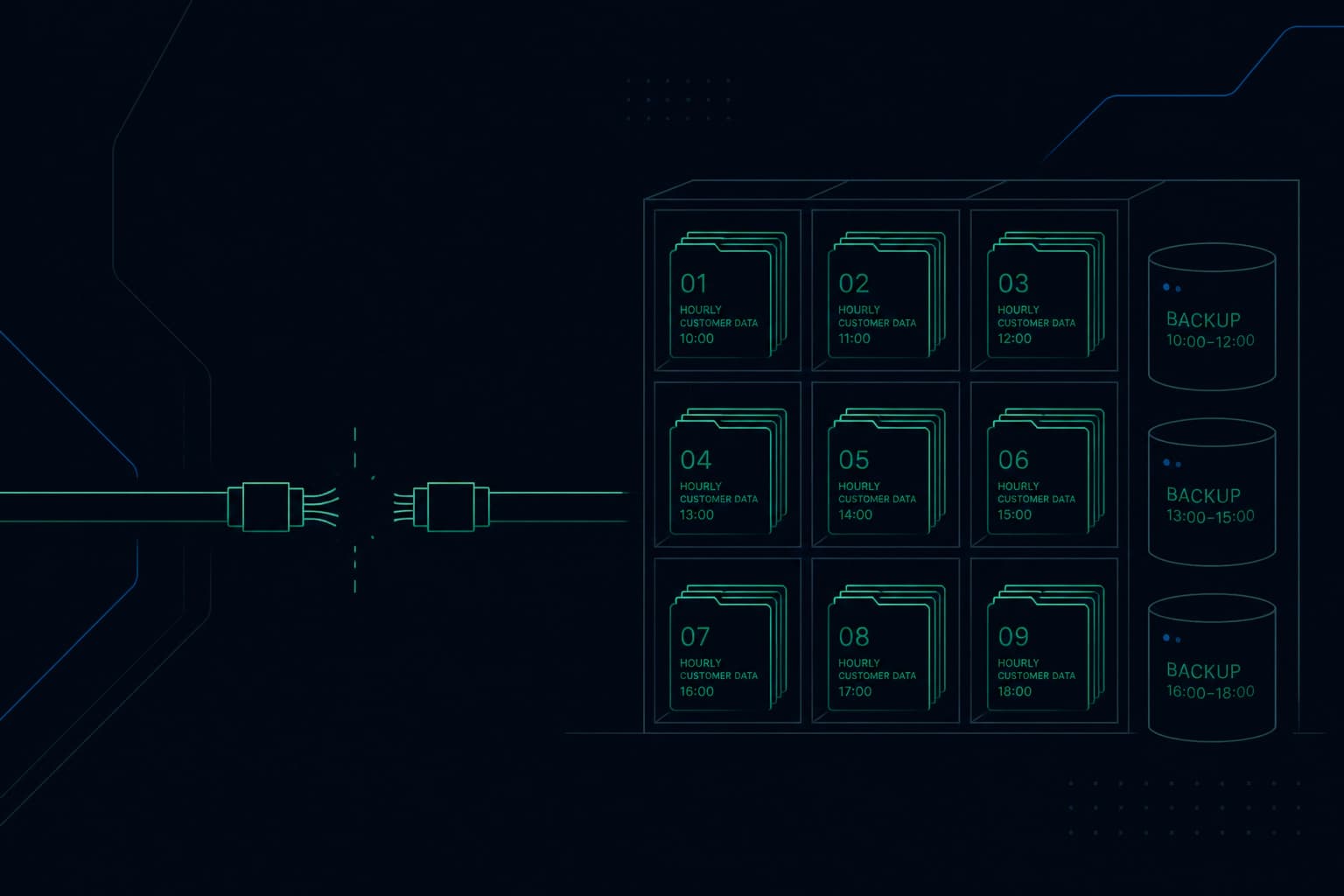
A stream of customer files accumulating in a former agency’s storage.

Customer files held by a former agency

You sent your agency customer files every hour for four years. The contract ended. Their storage still holds all of it.

  • Marketing and agencies
Today

You sent your agency audience files every hour: customer lists, purchase history, campaign results. Over four years that is tens of thousands of files, in their storage, their backups and the working folders of people who have since left.

The contract ends. You disable their logins and shake hands. Disabling logins stops anything new. It does nothing about the files already sent, and their next client may be your competitor.

With NakodaX

You send the files as protected data, with a licence for the agency. Their systems read the files the same way as before, on the same schedule. Each file needs a key, and the key is released only while the licence is valid.

When the contract ends, you revoke the licence. Keys stop being released for every file you ever sent, and your activity record shows the date and every attempt since.

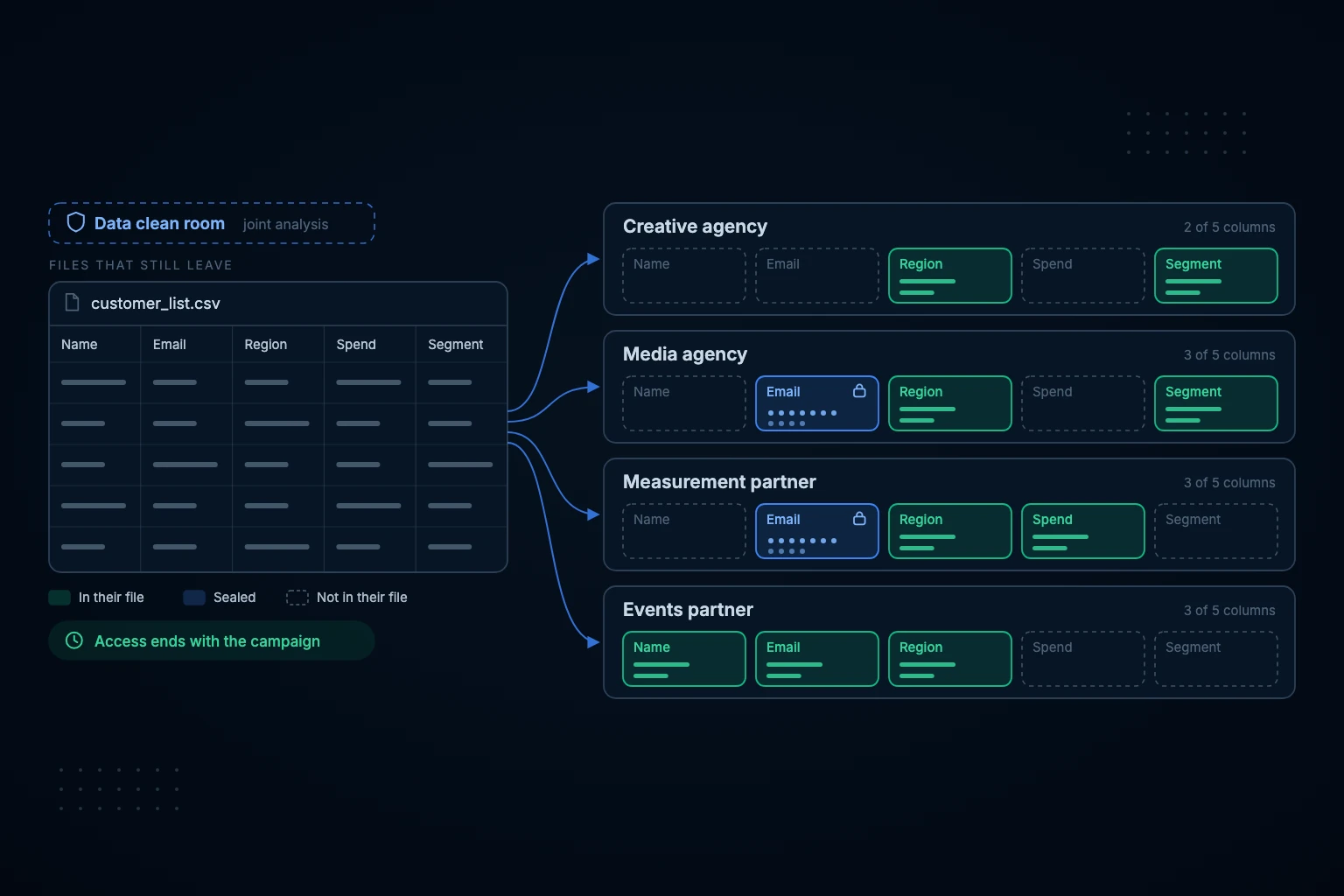
One customer list split into four different views for a creative agency, a media agency, a measurement partner and an events partner, next to a data clean room.

Customer lists sent to agencies for one campaign

Your data clean room covers the analysis. The customer list that went to three agencies and a measurement partner for one launch is still out there.

  • Marketing and agencies
Today

A launch needs data. The creative agency wants your best customers to shape the message. The media agency wants the audience file to build the buy. The measurement partner wants purchase records to prove it worked. So the same customer list goes to all of them, with every column on it.

Teams that run a data clean room know the answer for the analysis. The files around it still go out by email and shared drive, and a year later nobody can say who still has them.

With NakodaX

Each partner receives a view made for them. The creative agency gets segments and no names. The media agency gets the audience columns it needs. The measurement partner gets purchases and no contact details. Sensitive columns are sealed or left out, so a partner does the work without ever holding what it does not need.

Every delivery carries the end date of the campaign. When the campaign ends, the files stop opening, you see who read what, and you can switch off one partner without touching the others. Keep your data clean room for the joint analysis. Use NakodaX for everything that still has to leave as a file.

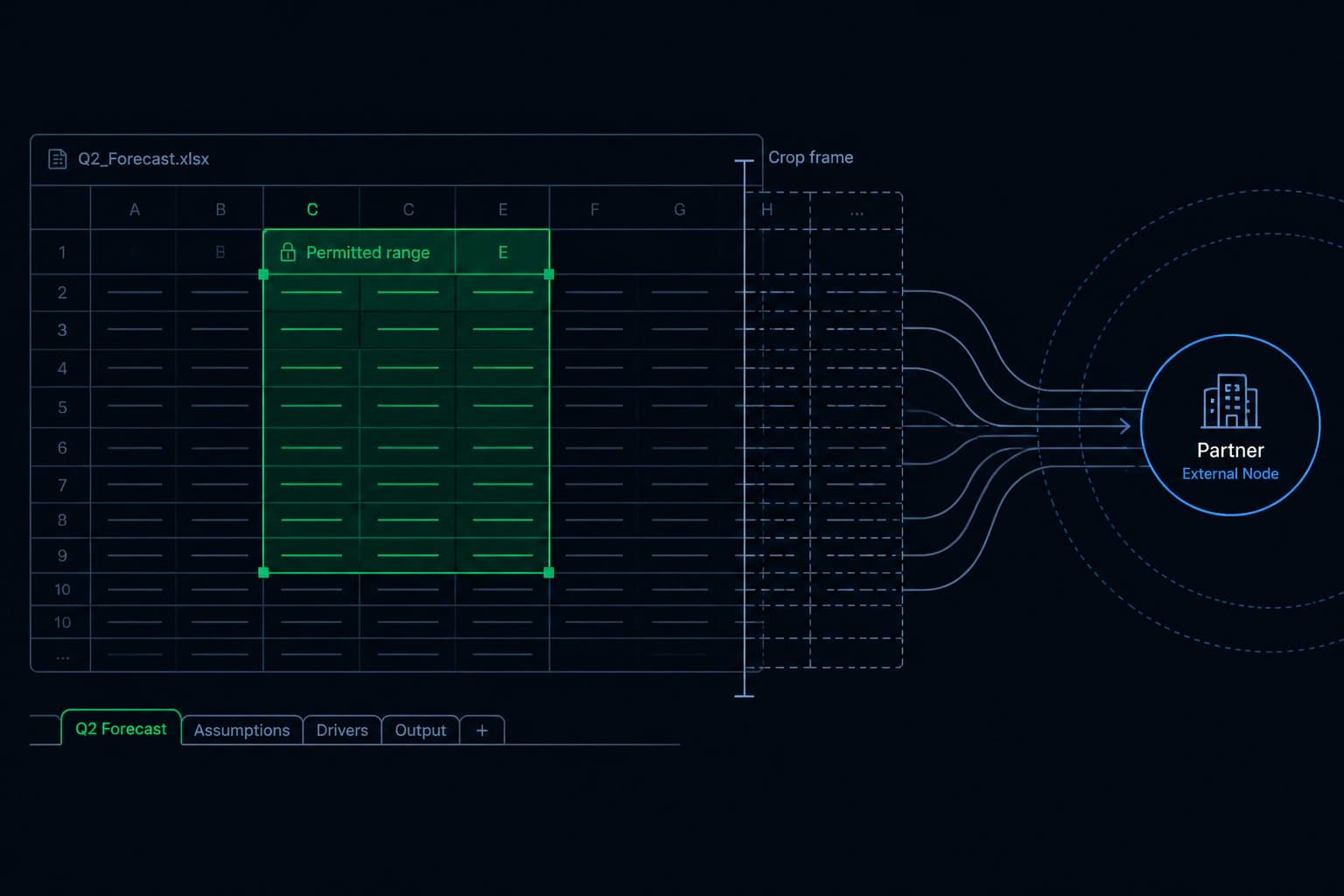
A full data export reaching a partner who needed only one part of it.

Partners who receive the whole export

They needed one region’s numbers. You sent the whole sheet, because making a cut every week is work nobody has time for.

  • Finance and insurance
  • Data providers and marketplaces
  • Also Document Protection
Today

A partner asks for their own region. Your export holds every region. To cut it you open the file, delete the rows that are not theirs, check you have not broken a formula, and save a new version. That takes ten minutes, every week, for each partner.

So it does not happen. The whole file goes, week after week. The partner sees margins, regions and accounts that were never their business, and nobody did anything wrong.

With NakodaX

You choose what each partner may see: sheets, columns, rows, slides or pages. Each partner gets a file with only that. What you leave out is not hidden behind a warning. It is not in their file at all.

You set the choice once and reuse it. The next export goes out cut for every partner, with no cutting by hand on a Monday morning.

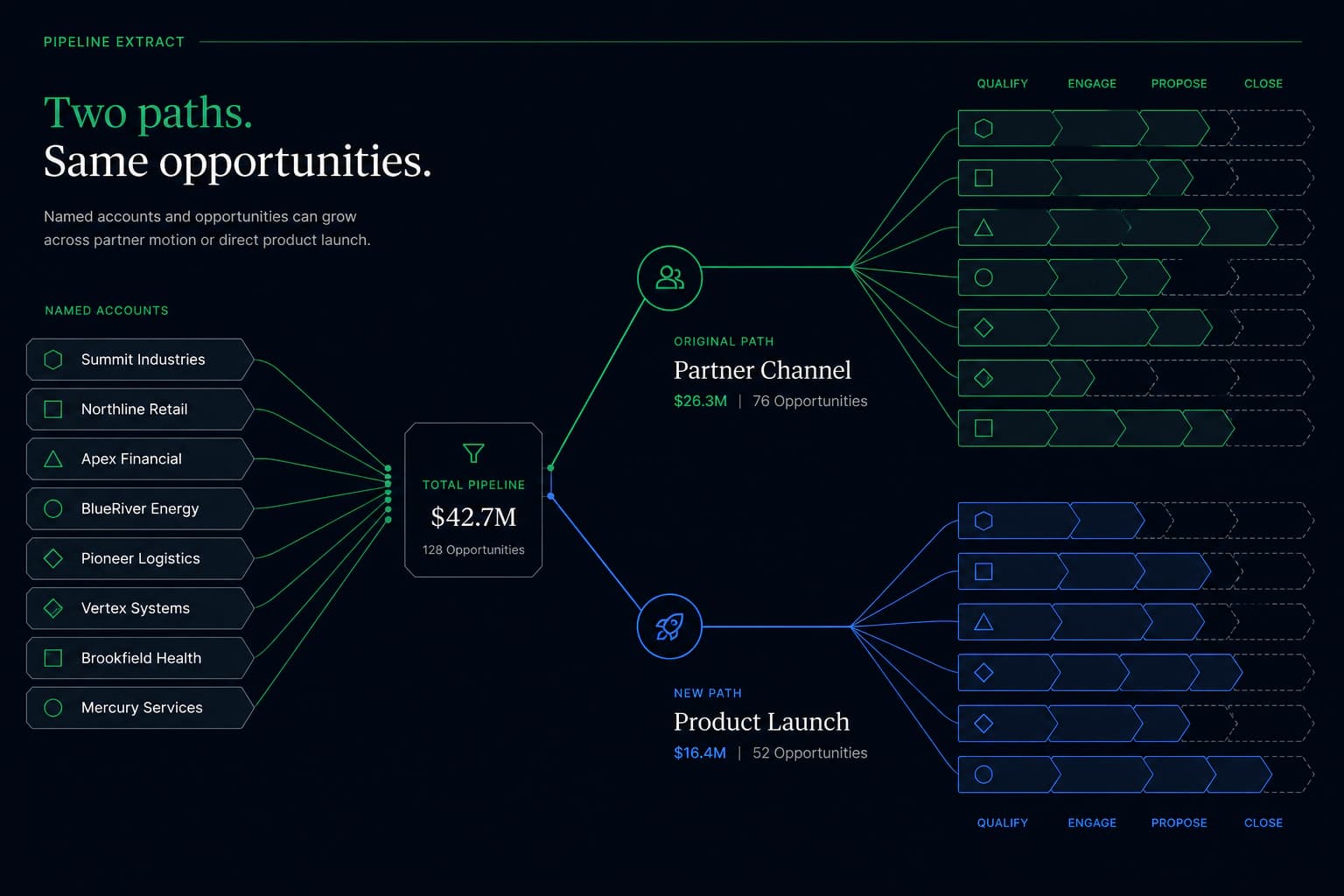
Pipeline extracts held by a former reseller now selling a rival product.

A reseller who becomes a competitor

Your reseller got a pipeline extract every quarter. Then they launched a competing product, holding your customer list.

  • Software companies
Today

A channel partner cannot sell without knowing what to sell and to whom. So they get the pipeline extract every quarter: named accounts, deal sizes, close dates and the review deck. Sending it was the right call.

Then the partnership ends. Six months later they launch a competing product, and every extract you ever sent is the list of who to call.

With NakodaX

You send each extract as protected data, with a licence for that partner. They work with the files as before. Each partner has its own licence, so you can share more while the partnership is healthy.

When the partnership ends, you revoke the licence. Keys stop being released for every extract you ever sent, from the first quarter to the last.

Engineering drawings and specifications accumulating at a contract manufacturer.

Drawings held by your manufacturer

Your contract manufacturer holds every drawing and spec you’ve ever sent. So does whoever they quote for next.

  • Manufacturing and suppliers
Today

Making a physical product means sending your designs out: drawings, specifications, parts lists and tolerances. Everything a factory needs to build your product is everything anyone needs to build your product.

Those files pile up at your suppliers for years. Lookalike and grey market products often start from the exact files you sent, still sitting in a supplier's system long after you moved production elsewhere.

With NakodaX

You send drawings and specs as protected files, one share for each supplier. Each supplier opens only its own files, for as long as it makes your product.

When you change manufacturer, you end the old supplier's access. Its copies stop opening, and your next product's drawings never join an archive you cannot reach.

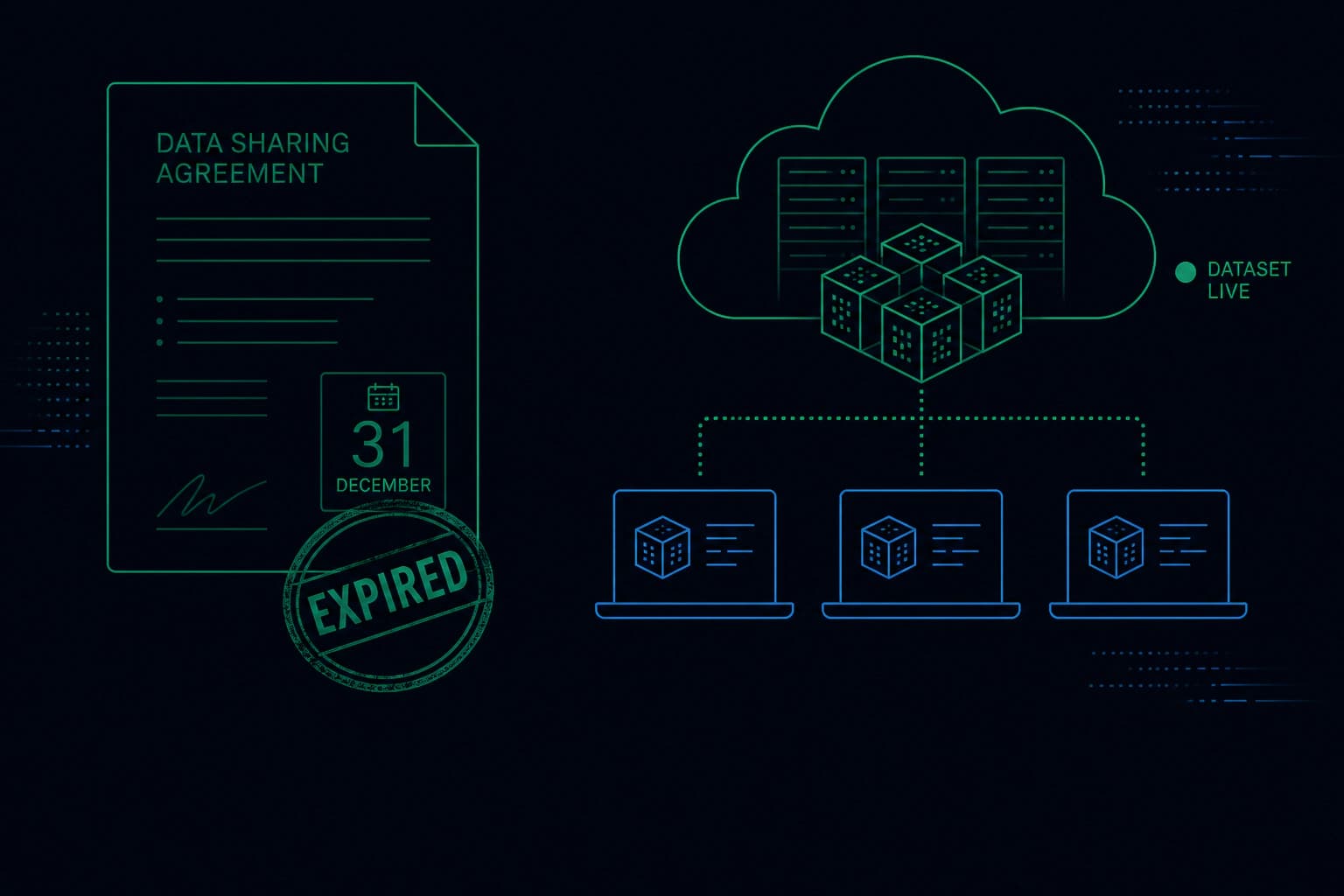
A data sharing agreement past its end date while the data stays readable.

Data deletion clauses you can’t verify

The data sharing agreement ended on 31 December. The data is in their cloud, three laptops, and a backup nobody has touched in a year.

  • Finance and insurance
  • Legal and HR
  • Outsourcing and BPO
  • Data providers and marketplaces
Today

Research agreements, pilots and data sharing agreements all have end dates. On the first working day after, someone sends the email: please confirm you have deleted the data. A reply comes back saying it has, and your compliance team files it.

Nobody has ever checked one of those replies. Nobody can.

With NakodaX

You share the data as protected data, and set the licence to end on the agreement's end date. Access stops on schedule, with no email and no one having to remember.

You hold a record of when it ended and every attempt to open anything since. A deletion clause becomes a log an auditor can read.

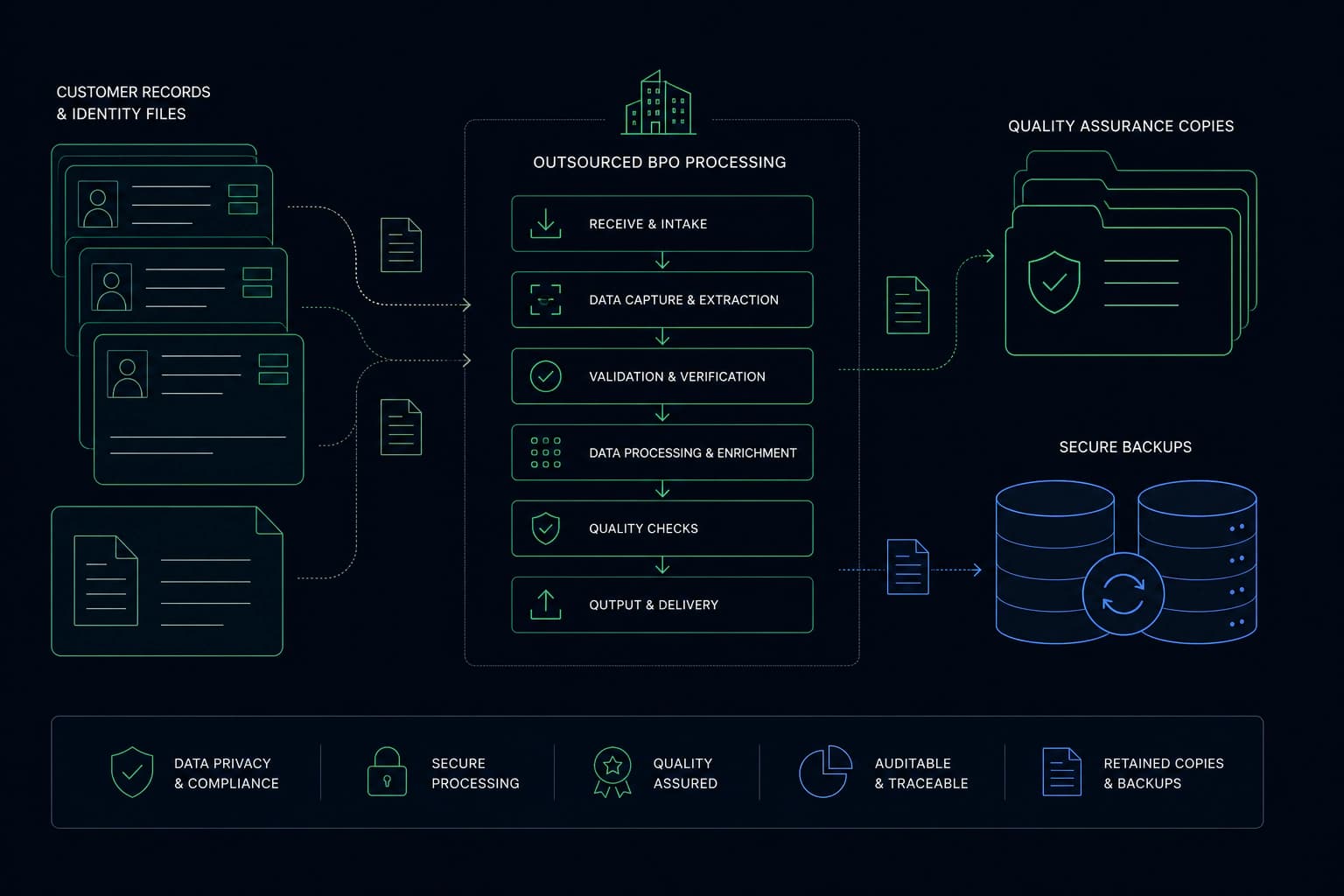
Customer records spread across an outsourcing provider’s systems.

Customer records held by an outsourcing vendor

Your outsourced team processed customer records for six years. Where are those files now? Truthfully: you don’t know.

  • Finance and insurance
  • Outsourcing and BPO
Today

Outsourcing support, claims or back office work means your customers' details flow into another company's systems every day. Records get exported for quality checks, sampled for training and copied into working folders by agents who have since moved on.

Then the contract ends, or a regulator asks a plain question: what happened to that data? Most companies hold a signed deletion certificate and no way to check it.

With NakodaX

You send the records as protected data, with a licence for the vendor. When the engagement ends, you revoke the licence. Keys stop being released for everything you ever sent.

What you hold afterwards is a record, not a certificate: access ended on this date, and here is every attempt to open anything since.

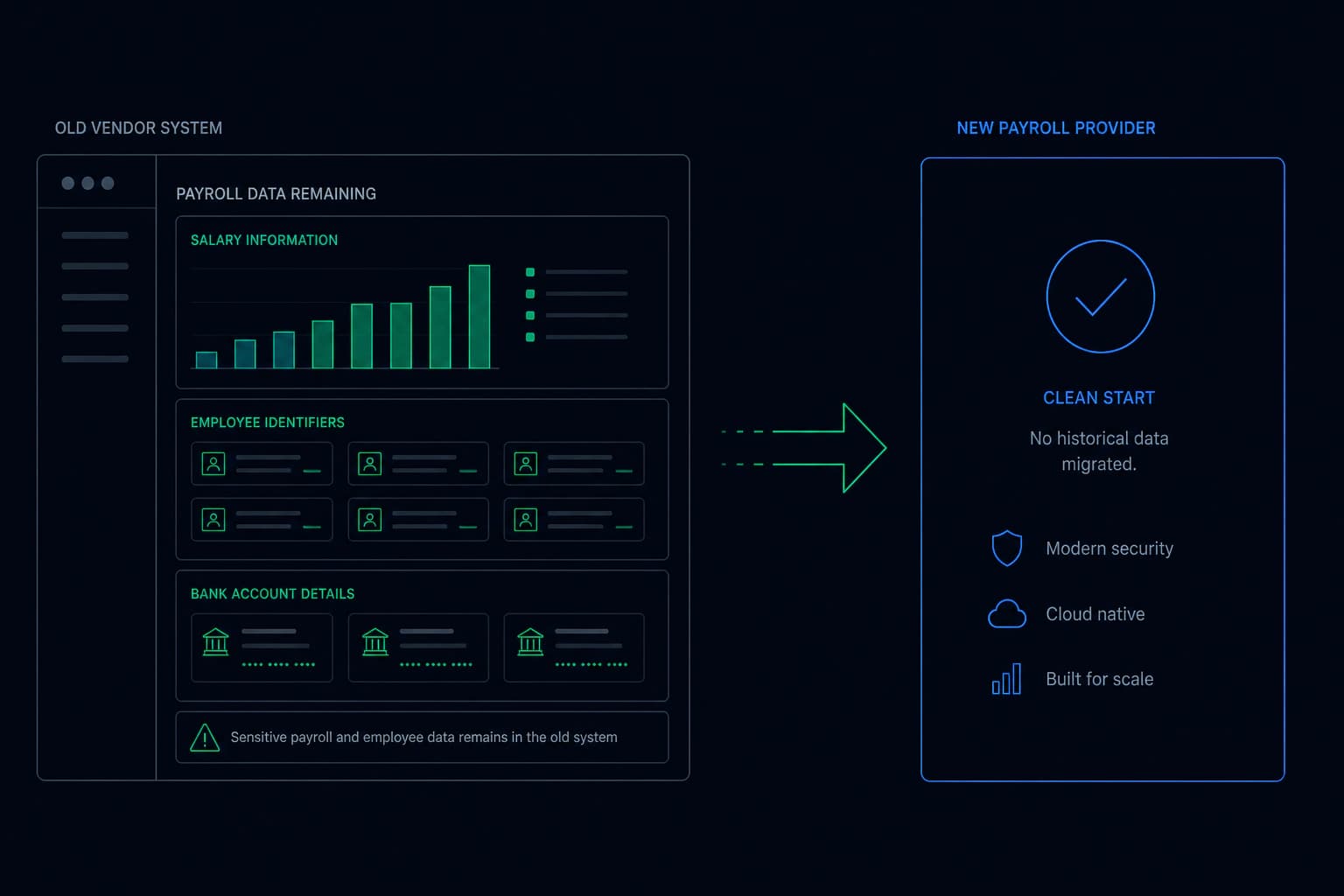
Employee payroll files remaining with a provider after switching away.

Employee data at your old payroll provider

You changed payroll providers last year. The salaries, IDs and bank details of everyone you employ are still with the old one.

  • Legal and HR
Today

Payroll is the most sensitive file your business sends on a schedule: names, addresses, ID numbers, salaries and bank details. It goes out every month, for years, and nobody thinks about it because it is routine.

Then you switch providers. The move is planned with care, but the years of files at the old provider are not part of the plan. They stay, with a company you no longer pay, under a deletion clause nobody will check.

With NakodaX

You send payroll files as protected data, with a licence for the provider. When the new provider is running, you revoke the old licence. Keys stop being released, so the old provider's files stop opening, this year's and every year before.

Your data protection officer gets a dated record of when access ended and every attempt since.

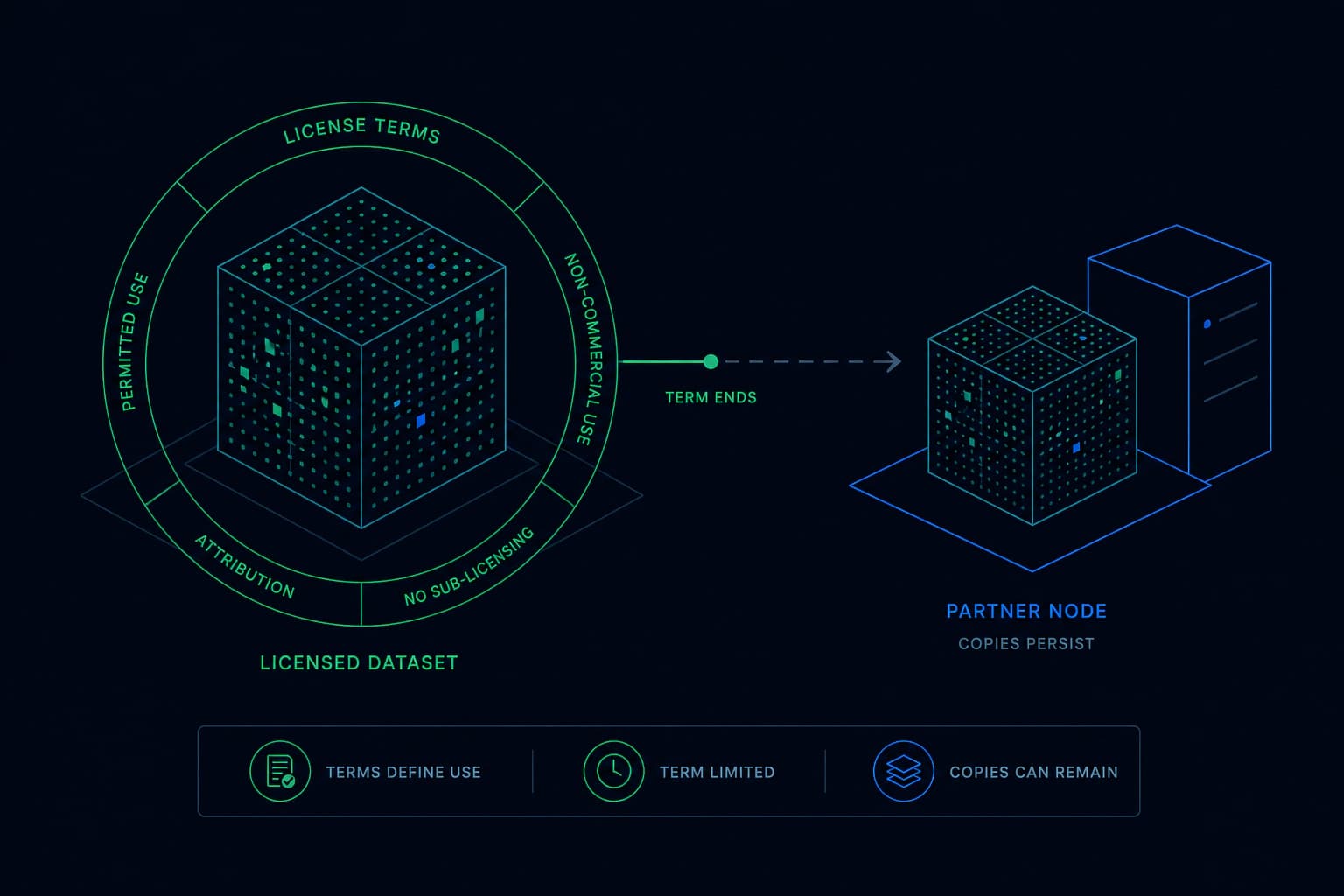
A licensed dataset still readable after the licence term has ended.

Datasets that outlive the licence

You licensed your data for one use and one term. The term ends. The dataset doesn’t.

  • Training and publishing
  • Data providers and marketplaces
Today

Data is now a product. You license it to partners, analysts and AI teams for one purpose and one term. But the data still arrives as a file, and once it is delivered, nothing enforces the licence except the licensee's good manners.

The term ends on a date. The dataset does not notice.

With NakodaX

You send the dataset as protected data, with a licence for each customer. Every file needs a key, and the key is released only while the licence is valid. When the term ends, the keys stop.

Renewal becomes a real decision, because not renewing has a result. Every read is logged, so you also see how the data is used.

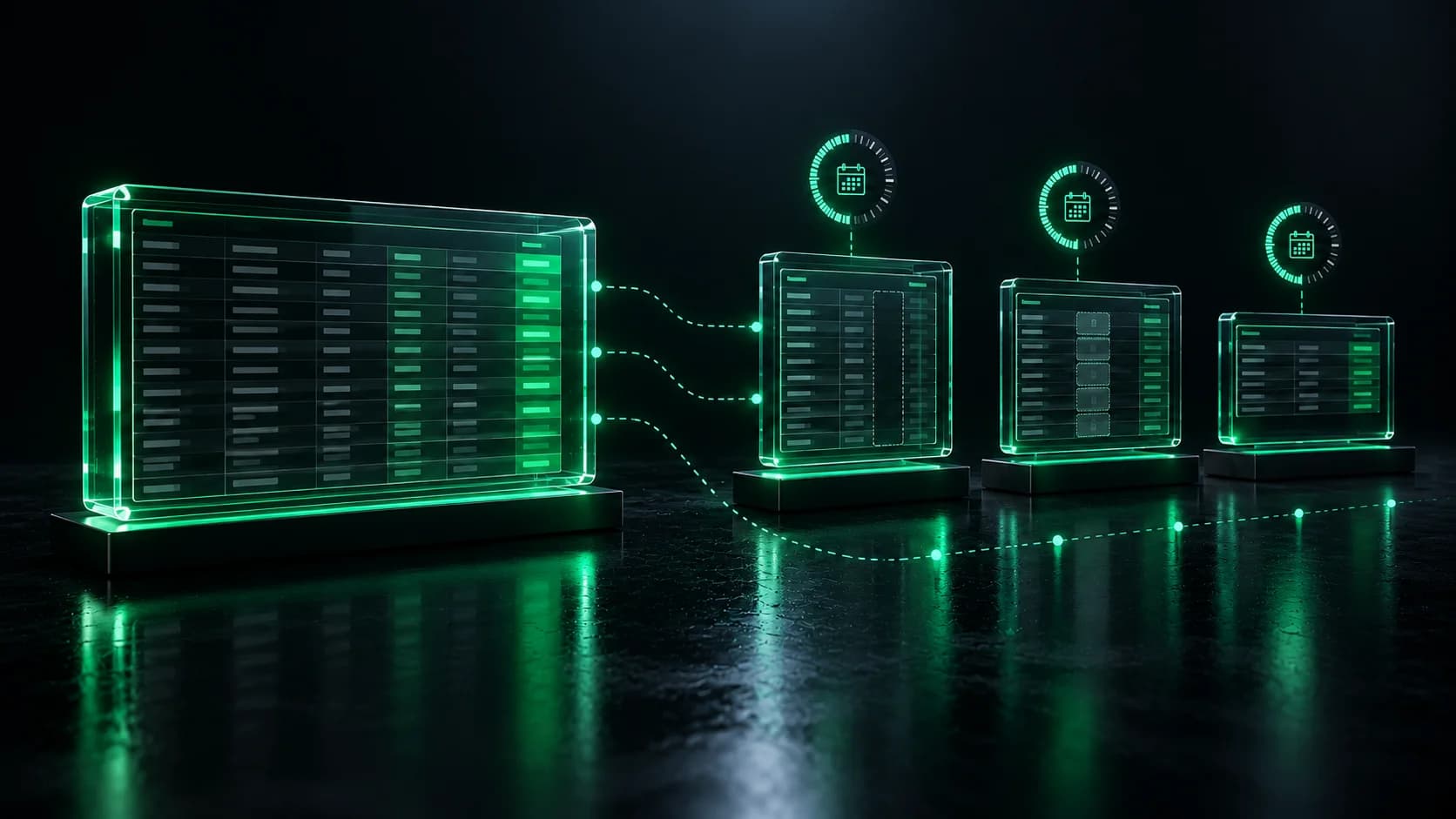
A large glowing data table linked to three smaller tables, one missing a column, one with a sealed column and one with fewer rows, each under an end date ring.

When sensitive data outlives the project it was shared for

A project needs your most sensitive records. A research partner, another organisation and an analytics contractor each get an extract. The project ends. The extracts don’t.

  • Finance and insurance
  • Legal and HR
  • Government and enterprise
Today

Every partner gets the same extract, ID numbers included, and keeps it after the project ends. You cannot see who still has it.

With NakodaX

Each partner gets a file with only its columns, under its own licence and end date. When the project ends, the keys stop, and every read has a record.

A wide data table on a desk sends three smaller tables along green dashed arrows, marked I, II and III, with one, two and three lit columns, each beside a calendar and clock for its end date.

When every subscriber gets the same file, whatever plan they pay for

A data provider sells a basic plan, a premium plan and a full plan. The daily file has every column in it, and every subscriber gets that file.

  • Training and publishing
  • Data providers and marketplaces
Today

Every subscriber receives every column, so a basic subscriber holds the premium data without paying for it.

With NakodaX

You write one policy for each plan. Each subscriber gets a file with only its plan’s columns, under its own licence with an end date.

A data table with one column lit green sends a copy along a green dashed arrow to a second table where that column is replaced by locked tiles, with a glowing key standing beside the first table.

When a test team needs realistic data but not the real values

An outside team tests a system with real customer data, because invented values fail the format checks. The names and account numbers go with it.

  • Finance and insurance
  • Outsourcing and BPO
Today

The team gets real customer records, with names, ID numbers and account numbers, because the system rejects values in the wrong format.

With NakodaX

The sensitive columns are sealed with their format kept. The team gets a file of the same shape whose sealed values pass the format checks, and only a licence holder can unseal them.

Source Protection

9 situations

Protect software delivered outside your business

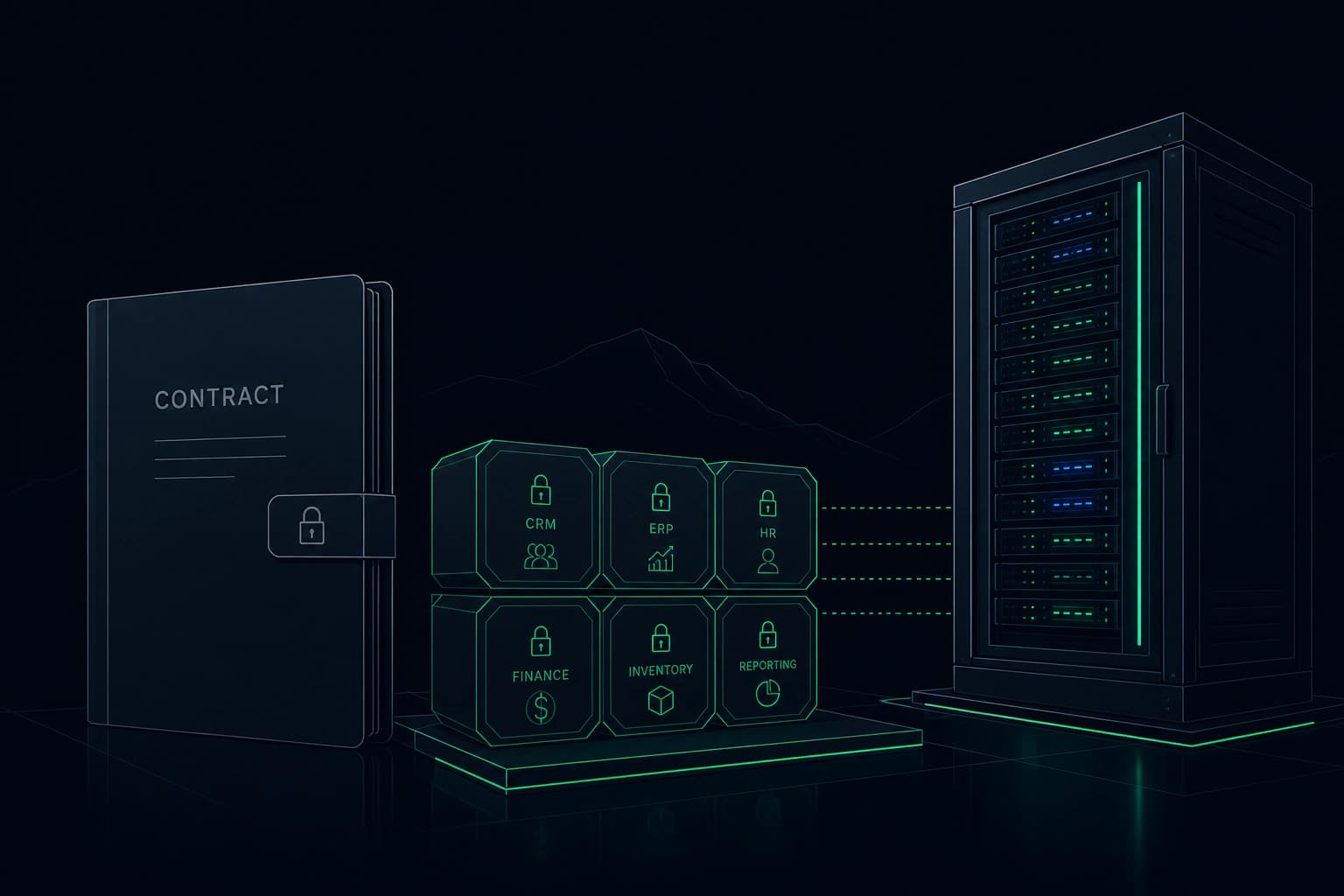
A sealed contract beside locked software modules and a customer’s server rack.

When your customer runs your software on their own servers

Big customers want your software inside their own environment. That means handing them a full, working copy of your code, and you have no way to switch it off when the contract ends.

  • Finance and insurance
  • Software companies
  • Government and enterprise
Today

Customers who host your software hold a full, readable copy of it. When the contract ends, nothing stops it running or being copied.

With NakodaX

Your business logic ships locked. It opens only while the customer’s licence is active, and you can end one customer’s access from your dashboard without touching the others.

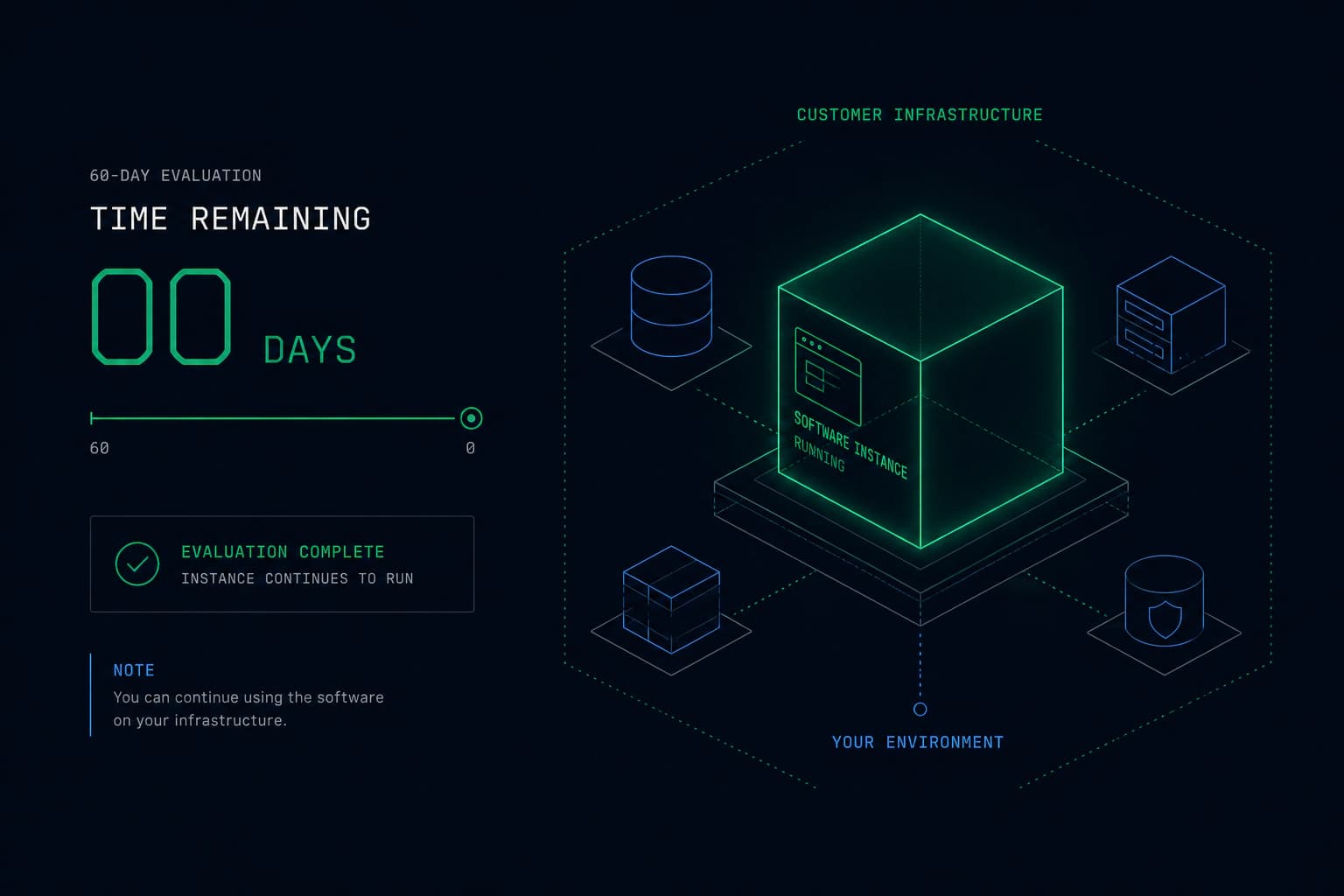
An expired evaluation deployment still running on a customer’s infrastructure.

When a free pilot keeps running on the customer’s servers

You installed a 60 day pilot on a prospect’s servers. The deal stalled. A year later, they are still using it, and they have a full copy of your code.

  • Software companies
Today

Pilots on a customer’s servers end only when the customer removes them. Most never do, and the code stays with them.

With NakodaX

Each pilot gets a licence with an end date. When it passes, the locked parts stop opening, and extending is a click in your dashboard.

Source code distributed across an outside development team’s machines.

When the agency that built your product keeps a copy

You paid an agency to build your product. The project ended, but their copies of your code didn’t. With AI, those copies are one rewrite away from someone else’s product.

  • Software companies
  • Outsourcing and BPO
Today

An agency that builds your product holds a full copy of it, on many laptops and accounts. Those copies outlast the project and the people, and AI makes reuse hard to spot.

With NakodaX

The business logic is locked. The agency builds against stand ins, changes to it need your approval, and copies left behind cannot be read or run.

Protected code modules staying behind as an engineer departs.

When a developer leaves with a copy of your code

Developers keep copies of the code they work on. When they leave, the copy leaves too. With AI tools, it can become a competitor’s product in weeks.

  • Software companies
Today

Developers copy the repository to laptops, home machines and personal accounts. Removing access on the last day does not remove those copies, and AI tools can turn a copy into a new product in weeks.

With NakodaX

The files that hold your business logic are locked. Most of the team works with stand ins, a few named people open the real files with approval, and a copy taken on the way out cannot be read or run.

Sensitive system code locked on a government server while contractors work against stand ins.

Sensitive government and defense code built by contractors

Defense and government systems are built by integrators, subcontractors and rotating staff. Each of them ends up holding a copy of code that should never leave the building.

  • Software companies
  • Outsourcing and BPO
  • Government and enterprise
Today

Integrators, subcontractors and rotating staff all hold readable copies of sensitive code. When they move on, the copies go with them.

With NakodaX

Sensitive logic is locked, the keys stay on your own servers, contractors build against stand ins, and every change to the real code needs approval and leaves a record.

A machine learning pipeline of locked code modules staying behind as a data scientist departs.

When a data scientist leaves with your ML pipeline

Your model’s edge is in the code around it: how features are built, how it is trained, how results are adjusted. That code is plain Python, and it is easy to take.

  • Finance and insurance
  • Software companies
Today

Every data scientist holds the full recipe: features, training and result rules, in plain Python. When one leaves, the recipe can leave too.

With NakodaX

The Python files that hold your business logic are locked. The team builds against stand ins, a few named people open the real code with approval, and production runs the locked files under a licence.

A government agency server room with locked software modules and a licence that ends with the contract.

When your software runs inside a government agency after the contract ends

Agencies run your software on their own servers, often with no internet. The contract year ends, the budget moves, and your product keeps running, with no way for you to know or to stop it.

  • Software companies
  • Government and enterprise
Today

The agency runs a full copy of your software on its own servers. When the contract ends or moves to someone else, nothing stops it running.

With NakodaX

Your business logic ships locked and opens only under the agency’s licence. The licence ends with the contract, and it works inside their own network, even offline.

A chain of subcontractor machines each holding locked code modules, with one licence per company.

When your code reaches companies you never contracted

A prime contractor brings in subcontractors, and they bring in their own. By the third level, your code is on machines you have never heard of.

  • Software companies
  • Outsourcing and BPO
  • Government and enterprise
Today

Your code passes down a chain of subcontractors you never chose, and each level keeps a readable copy.

With NakodaX

Everyone in the chain builds against stand ins under their own licence. You can see each one, revoke any one, and the readable part never leaves.

A record of dated access events beside locked code modules, narrowing a long list of people to a few.

After an incident, who actually held your code?

Something leaks, or a competitor ships something familiar. The first question is who had the code and when. Most companies cannot answer it.

  • Finance and insurance
  • Software companies
  • Government and enterprise
Today

After a leak, you have a long list of people who could have copied the code, and no record of who opened what.

With NakodaX

The files that hold your business logic open only through a licence or an approved session, and each one is recorded. The list of who could have read them is short and dated.

Which one is yours?

If one of these read like your last quarter, start there. Each product has a free trial, or tell us what happened and we will show you how it would work.