
NakodaX

Situations · Document protection

How to stop clients sharing the reports they bought

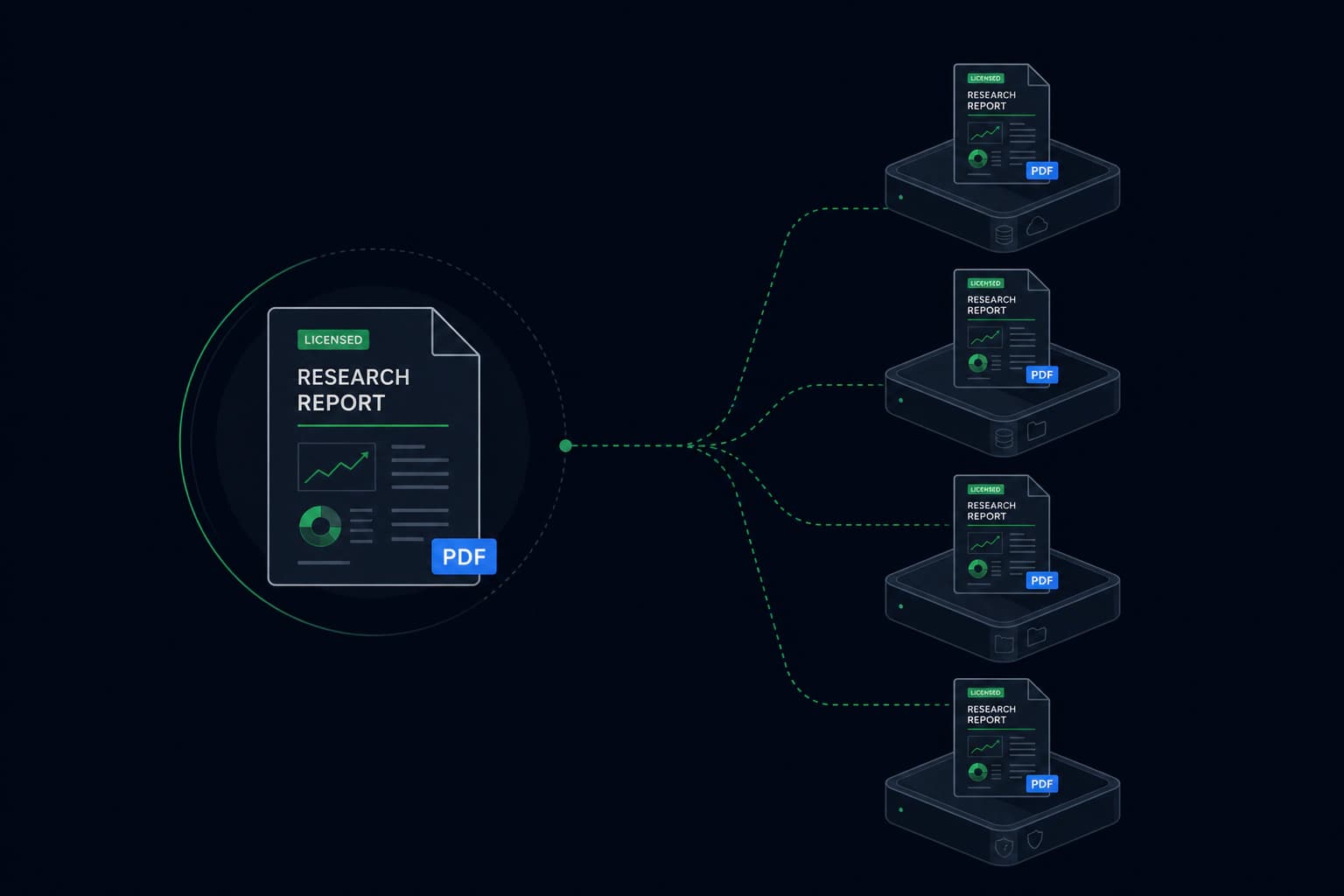
A licensed research report duplicating across several company drives.

When the product is a document, forwarding is lost revenue: one licence becomes department-wide reading. The enforceable version is delivering reports as controlled links licensed per reader, with open caps and access that ends with the subscription, plus readership records that show which clients have outgrown their plan.

When the product is a document, forwarding is your P&L

Research firms, consultancies, valuation practices and benchmark providers all sell the same physical object: a file. And a file has no idea how many people were licensed to read it.

So the leak is quiet and constant. One analyst buys a seat. They forward the report to their team, because that is helpful. Someone saves it to the department drive, because that is organised. A year later it is in three business units and on a former employee’s laptop at another firm.

Nobody stole anything. You sold one licence and delivered an unlimited one.

The renewal conversation you cannot win

The commercial damage is not only the copies. It is that renewal becomes optional in a way you cannot see.

A client with one seat and department-wide readership has already got what they need. They will renew if they want this year’s edition, and not if the last one is good enough. You have no way of knowing which, because you have no idea how much the material is actually used.

Meanwhile the client who genuinely has one reader is paying the same as the client with forty.

Licensed per reader, enforced by the file

Delivered as controlled links, a report opens for the readers on the licence, as many times as the licence allows, until the subscription ends.

Non-renewal stops being a polite conversation about value and starts having a consequence: the library the client has accumulated stops opening. That is not a punishment. It is what they agreed to buy, made real.

Readers themselves notice almost nothing. They click through from your email and read, on any device, without an account.

Readership becomes your best sales input

This is the part that usually pays for the whole thing.

For the first time you can see which clients read what, how often, and which sections. A client whose single seat generates forty opens a month across five different documents is not a renewal risk. They are an expansion conversation, and you can open it with a specific observation instead of a generic upsell.

The reverse is just as useful. A client with low readership is a churn risk you can see three months out rather than on the day they decline.

What about the client who objects

Some will. The honest answer is that the objection is usually about friction, not principle, and the friction here is close to zero: no login, no software.

Where it is about principle, it is worth hearing what they are really saying, which is often that they have been sharing more widely than the licence allowed and would prefer that to continue.

What changes

The report opens for the readers who are licensed, as many times as the licence allows, until the subscription ends. And for the first time you see actual readership, which tells you exactly which client should be on a bigger plan.

access ended

Related questions

How do you stop clients sharing paid reports?
Deliver reports as controlled links licensed per reader rather than as attachments. The report opens for licensed readers, with open caps if you want them, and access ends with the subscription. Forwarded copies do not open for people outside the licence.
How can I protect PDF research from being forwarded?
A PDF sent as an attachment cannot be protected after delivery. Sending the same document as a permission-checked link means each open is authorised against the licence, so forwarding it does not extend readership beyond the people you licensed.
Can documents be licensed per reader?
Yes. Access is granted to named readers, and the number of opens and the subscription end date are both enforceable. You also get readership data per client, which is normally the fastest way to identify which accounts have outgrown their plan.

This one, or one very like it

Document protection. Start where the problem actually is.