NakodaX
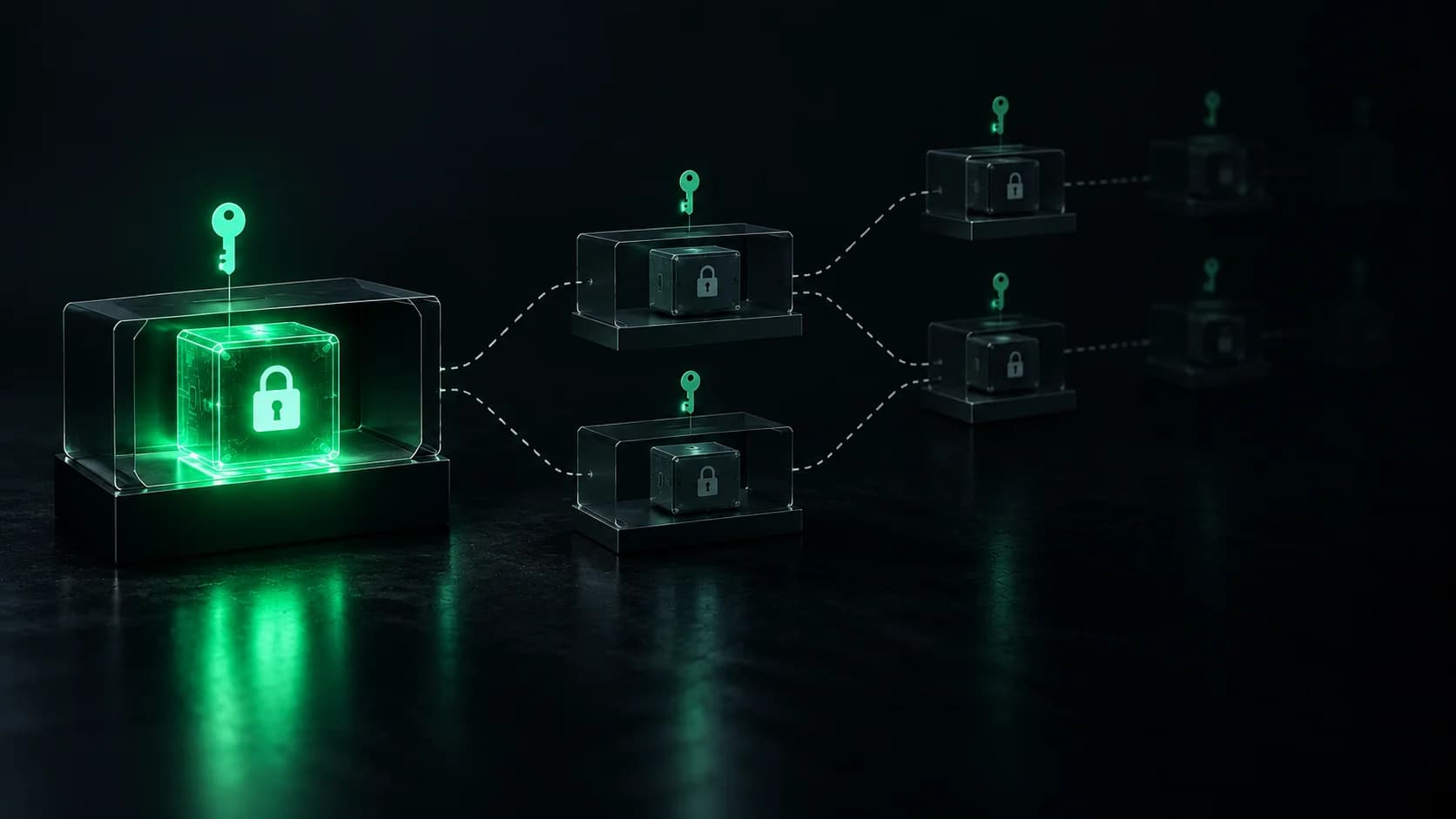
A chain of subcontractor machines each holding locked code modules, with one licence per company.

Situations· Source Protection

How do you stop your code spreading down a chain of subcontractors?

Give every company in the chain its own licence and stand ins, so your business logic never travels down with the work.

What changes

Everyone in the chain builds against stand ins under their own licence. You can see each one, revoke any one, and the readable part never leaves.

In short

Each level of a subcontractor chain passes down a full copy, and you may hold a contract with the first level only. Lock the files that hold your business logic and give every company its own licence. All of them build against stand ins, and you can revoke any one.

What happens today

You built a routing and scheduling engine. A prime contractor wins a large public project and wants to use it. They need two subcontractors to adapt it for different regions, and one of them brings in a small specialist firm for the reporting module.

Your contract is with the prime. The prime’s contract passes your code to the subcontractors, subject to the same confidentiality terms. The specialist firm uses a freelancer for two months.

Eighteen months later you cannot list who has a copy.

How the leak happens

Each level passes down a full copy, because it is the easy way to give people what they need to work. Your confidentiality terms bind the first level. Past that, it depends on contracts you never saw.

People change firms. A freelancer or an employee of a small subcontractor moves to a company that competes with you, and with a readable copy, an AI tool can turn it into code that no longer looks like yours.

What it costs you

Your core engine is known, and reusable, by firms outside your control. A prime contractor can swap you out, because they and their chain already hold what makes you valuable. And you cannot show, after the fact, who had it.

What most companies do today, and where it falls short

Confidentiality terms flowed down in contracts give you a legal claim against each party, but you cannot see or enforce past the first level. Naming approved subcontractors says who is allowed, not what each one holds.

A secure shared workspace covers where work happens, not copies made to work offline or on a deadline. Return and deletion at the end cover the first level, not everyone below it.

How NakodaX changes this

First, lock your business logic. Most of a codebase is boilerplate: screens, logins, forms, reports, connections to other systems. It looks much the same in every product. Your business logic, the rules that make your product yours, sits separately in its own files. NakodaX scans your repository and suggests those files. You review the list and decide what to protect.

NakodaX does not change your original repository. It builds a new, protected repository next to it, where the locked files are replaced by stand ins and no history of those files is kept. Your team runs a switch over: the prime, every subcontractor and every freelancer stops working in the original repository and moves to the protected one. A developer licence opens the stand ins and never the real code, whichever machine it runs on.

The prime, each subcontractor and each specialist gets its own licence. You can see them, and revoke any one without affecting the others. If a subcontractor must change the real logic, a named person asks, a different admin approves, the window has an end date, and it is logged.

Each repository has its own key, so a key lost by one party does not open the rest of your code.

What changes for your team, and what does not

Copies made before the switch are not changed: code a subcontractor already holds in readable form stays readable. NakodaX protects from the day you switch. People in an approved change session can read the real files during that window.

Files you did not lock stay readable. Today it works with Python, JavaScript, TypeScript and SQL.

What changes

Everyone in the chain builds against stand ins under their own licence. You can see each one, revoke any one, and the readable part never leaves.

Answers

Related questions

How do I control who holds my code in a subcontractor chain?
Give each company its own licence and let all of them work against stand ins. You see every licence and can revoke any one.
Can subcontractors build without seeing the core code?
Yes. A developer licence opens stand ins, which take the same inputs and give a result, so they can build and test the rest of the product. The real logic is not inside them.
What if one subcontractor loses its key?
Each repository has its own key, so a lost key reaches that repository and not the rest of your codebase. You can revoke that company’s licence.

This one, or one very like it

IP protection. Start where the problem actually is.