
By NakodaX Engineering team
NakodaX · · Updated

NakodaX blog/Source Protection·2 min read
You cannot stop someone remembering code, but you can stop a copy working. With NakodaX Source Protection, the files that carry your business logic are encrypted and need a license key to run. Developers build against stand ins. When an engineer leaves, you end their license and those files stop working at the next key request.
By NakodaX Engineering team
NakodaX · · Updated

Remove their access, and also make the code they hold stop working.
An engineer with access to your code accepts an offer from a competitor. On the last day you remove them from the repository and collect the laptop.
The copy on their home computer, a personal account or an old backup is untouched. Removing access stops new copies. It does not close the ones that exist.
Anyone who works on the product can read the files that carry the real advantage: the pricing rules, the scoring, the matching, the integration that took two years to get right. A competitor with those files can rebuild a similar product in weeks. An AI tool can rewrite the code with new names so it no longer looks like yours.
A contract gives you a legal claim. It does not remove a copy.
Source Protection encrypts the few files that matter in a protected release. The rest of the code stays open and ordinary. Developers get a developer license that opens stand ins, which are placeholder versions with the same interface, never the real code.
If someone must change the real protected code, a change session is needed: a time limited window that a second person on your team approves, with a record of everything done in it.
While software runs on a licensed machine, the protected code is readable in that machine's memory. Revoking takes effect at the next key request, and a running process can continue until its cache refreshes, which can take hours. It cannot recover logic someone has already copied or learned. The story of the engineer who joined a competitor shows the whole case.
Protect the few files that matter, give each engineer their own license, and revoke it when they leave.
Related product
Let vendors and customers build or run software without receiving selected proprietary source code in readable form.
See how it worksStart a free trial, or tell us what you share and with whom, and we will show you how NakodaX handles it.
Real situations, and the video where there is one, on the same problem.
Video
When software has to run in a customer or vendor environment, see how NakodaX keeps selected proprietary components out of the readable release.
Watch (3:29)Situation
Defense and government systems are built by integrators, subcontractors and rotating staff. Each of them ends up holding a copy of code that should never leave the building.
Read moreSituation
Something leaks, or a competitor ships something familiar. The first question is who had the code and when. Most companies cannot answer it.
Read more
New to NakodaX? Watch the overview
A full walkthrough of how NakodaX helps a business keep control of documents, business data and source code after they are shared, moved or deployed.
Watch the video (8:49)
Source Protection · 2 min read
Contractors need to build and test, not to hold your key logic. Here is how stand ins and change sessions let them work while the real code stays protected.
October 5, 2026
Source Protection · 7 min read
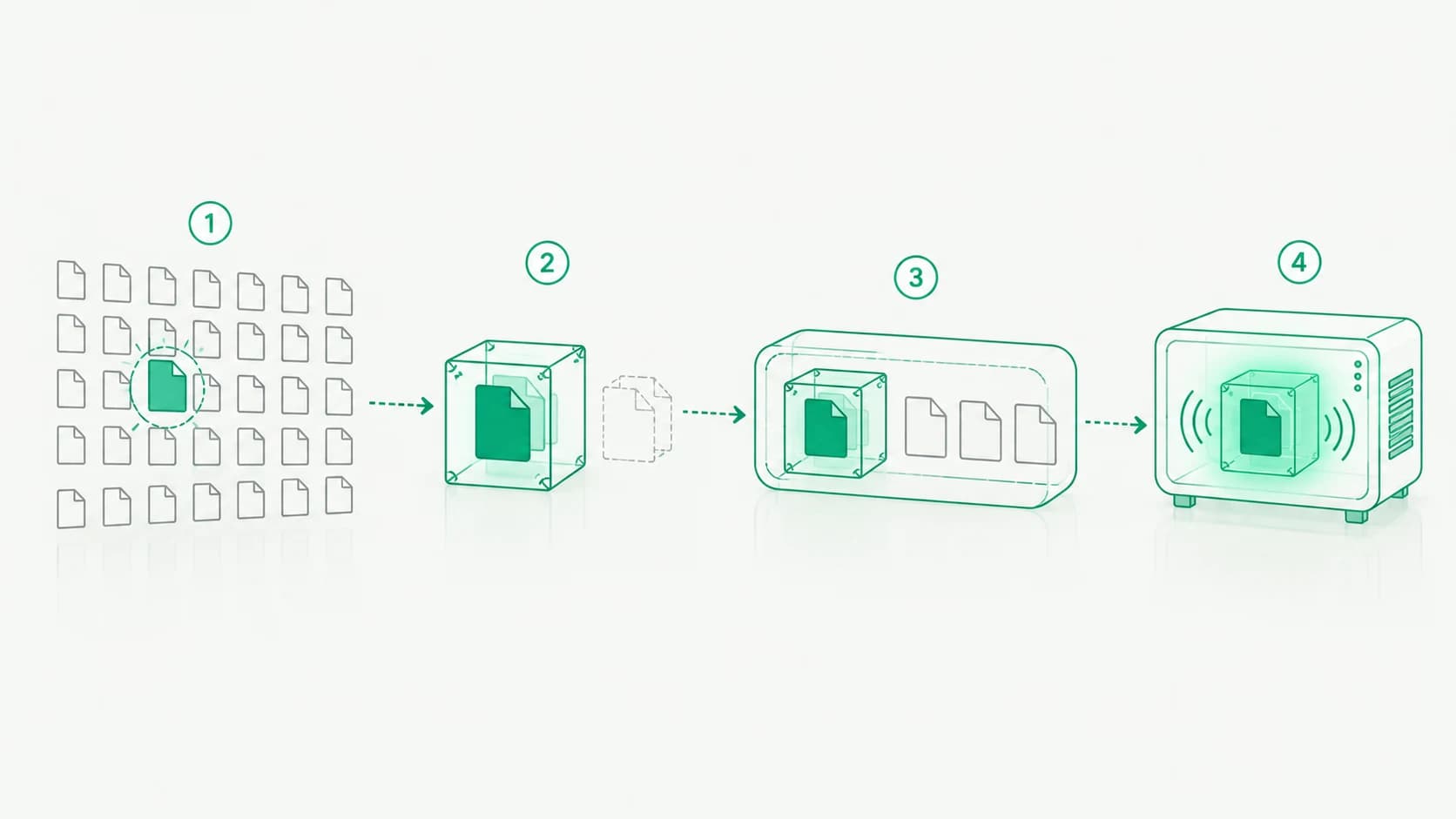
How NakodaX finds the code worth protecting, gives developers stand ins to build against, ships a protected release and decrypts the code only in memory.
October 13, 2026

Source Protection · 2 min read
Most of a codebase is easy to rebuild. A few files are not. Here is how to find them, keep the list short and protect them with NakodaX Source Protection.
September 16, 2026