
NakodaX

Situations · Document protection

How to share board papers that stop at the board

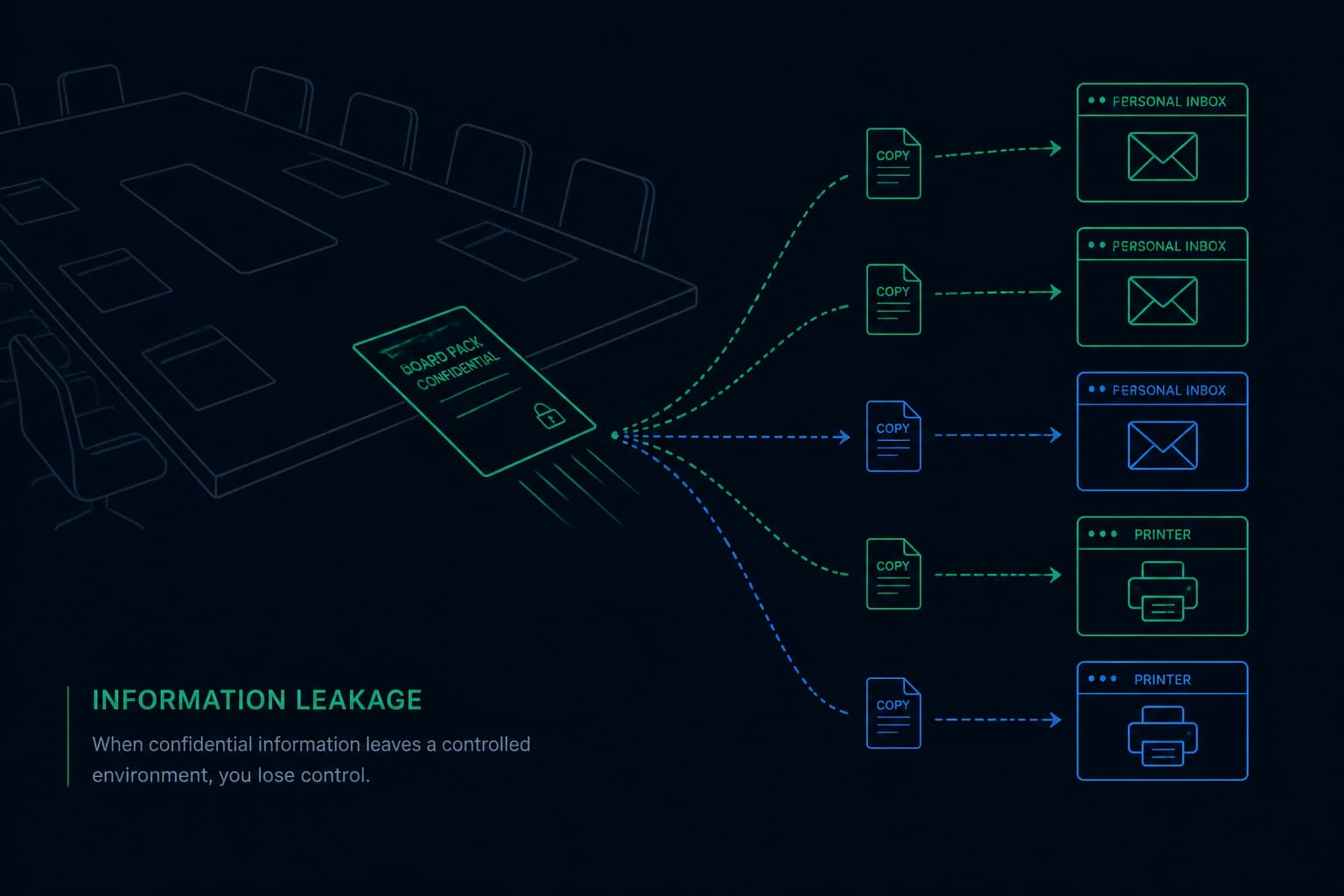
Board papers travelling beyond the boardroom table to devices outside it.

Board papers routinely travel beyond the board: to assistants, investors’ internal committees, and personal email. Secure distribution means sending packs as controlled links: access is per director, expires after the meeting, and a departing director’s entire history of papers can be revoked on the day they leave.

The most candid document your company produces

A board pack is written for a named group of people who have a legal duty to the company, which is exactly why it says things nothing else you produce says.

Real numbers rather than presented ones. Risks named as risks. Legal exposure. Decisions about people, sometimes about people who report to the person printing it. The going concern discussion. The acquisition you are considering and the one you walked away from.

It is the single document that would do most damage in the wrong hands, and it is distributed by email on a monthly schedule.

Where it goes after you send it

It reaches assistants, because directors have assistants and papers need printing and calendars need managing.

It reaches investors’ internal teams, because an investor director does not read a pack in isolation. They take it to their own investment committee, which is doing its job and is not your company.

And it reaches personal email, because reading two hundred pages on a plane is easier from a personal iPad, and a director who has been on boards for twenty years has a habit older than your policy.

The director who steps down

This is the moment the arithmetic turns. Board turnover is normal. An investor exits, a term ends, someone takes a role that creates a conflict.

They hand back the laptop if they had one. Their access to the portal is closed. And every pack they ever received stays exactly where it was: in their mail archive, on their devices, in the hands of an institution that may now be an investor in a competitor.

Ten years of your company’s most candid thinking leaves with a handshake.

Access per director, ending on the day they leave

Distributed as controlled links, a pack is readable by the directors you named, and stops being readable when you say so.

The natural rules are simple. Access expires a set period after the meeting, because a pack has a purpose and the purpose passes. And when a director leaves, you withdraw their access once and their entire history goes dark, not just the pack you can remember.

What does not change is the reading experience. A director clicks a link and reads the pack, on whichever device they were going to use anyway. A distribution method that makes board papers annoying to read does not survive contact with a board.

Knowing who read it before the meeting

Every company secretary would like to know, on the Sunday before a Tuesday board, who has opened the pack.

It changes how you run the meeting. If three directors have not opened the strategy section, you spend the first ten minutes differently. It is a small thing that makes the meeting better, and today it is entirely guesswork.

What changes

The pack reaches the board and stops at the board. You see who opened it before the meeting, access expires after it, and a departing director’s entire history of papers goes dark on the day they leave.

access ended

Related questions

How do you share board papers securely?
Distribute them as controlled links rather than attachments, with access granted per director and expiring after the meeting. This keeps papers readable for the people they were written for, and lets a departing director's entire history be revoked on the day they leave.
What is board pack distribution best practice?
Named access per director rather than a shared file, an expiry tied to the meeting cycle, a record of who opened what before the meeting, and revocation on departure. Crucially the reading experience must stay frictionless, or directors revert to email.
What happens to board papers when a director leaves?
Ordinarily they stay with the director indefinitely, across mail archives, devices and, for investor directors, their firm's systems. If papers were shared under ongoing permission, withdrawing that person's access closes their entire history at once.

This one, or one very like it

Document protection. Start where the problem actually is.