
By Pallav Boonlia
Founder & CTO, NakodaX ·

NakodaX blog/Perspective·3 min read
Why I moved away from AI SDLC frameworks and built my own personal AI developers to build NakodaX, and why decisions matter more than code.
By Pallav Boonlia
Founder & CTO, NakodaX ·
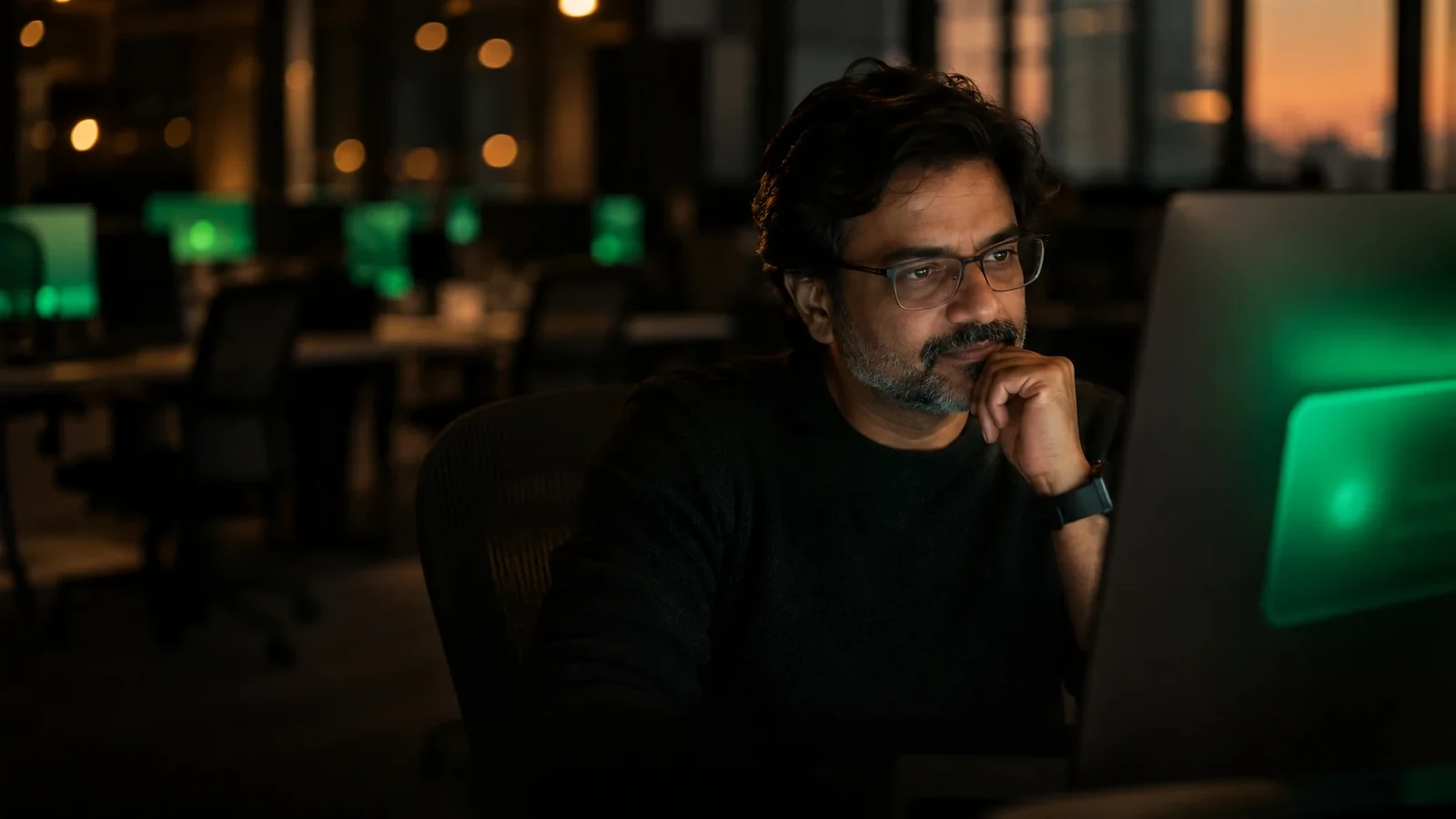
In my opinion, most developers today are writing code blindly.
AI tools can generate code faster than anyone can review it. But speed is not the real problem. The real problem is that developers do not see the decisions the tools are making for them. The explanations are not well summarised, so the reasoning stays buried inside long conversations and agent logs.
I see this close to home. A developer I work with just writes code and commits it. Why was this approach chosen? What else was considered? What will it cost us later? Nobody asks.
Even AI SDLC frameworks did not help me here. They gave me a process, but they did not help me understand what was actually being built.
I moved away from AI SDLC and switched to Dots and Duet. With them I built a set of personal virtual developers who work for me and build NakodaX.
The idea was simple. I wanted agents that work independently, understand the product, keep context, write code, review changes and help monitor ongoing development.
But I had one important requirement. I did not want to become just another person approving whatever the AI generated. I wanted the AI to understand how I make decisions.
The big problem was how to improve decision making the way I do it myself.
When I work on architecture or product decisions, I do not simply pick an option. I think about the business requirement, technical constraints, security, scalability, maintainability and the impact on the existing system.
This is where Jev and Gemini decision models became stronger for me. I applied a combination of both as a separate decision layer, so decisions become structured, explicit and reviewable before the work moves forward. It asks questions like:
The result is that building code and product is stronger than ever for me. It does not guarantee that every decision is correct, which is exactly why human oversight still matters.
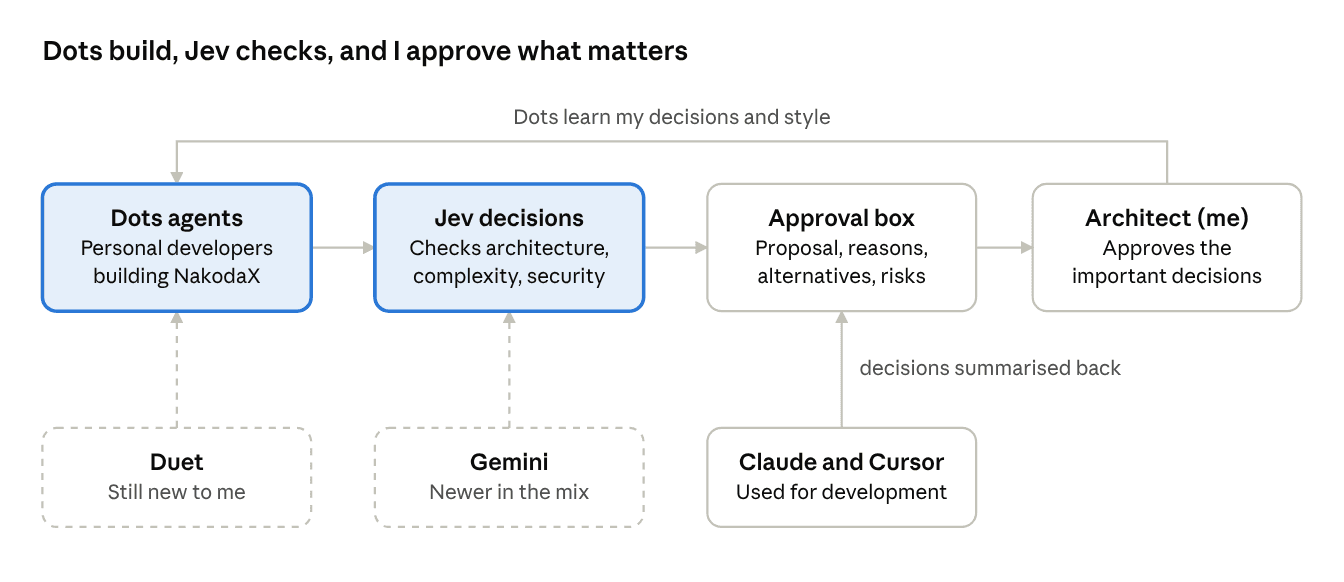
One great thing about Dots is that the agents are learning my decisions and my style. Over time they pick up the standards I expect and which decisions matter to me. They have started treating me as their friendly neighbourhood architect.
Duet is still new to me, so I do not have much feedback on it yet. I will share more once I have used it properly.
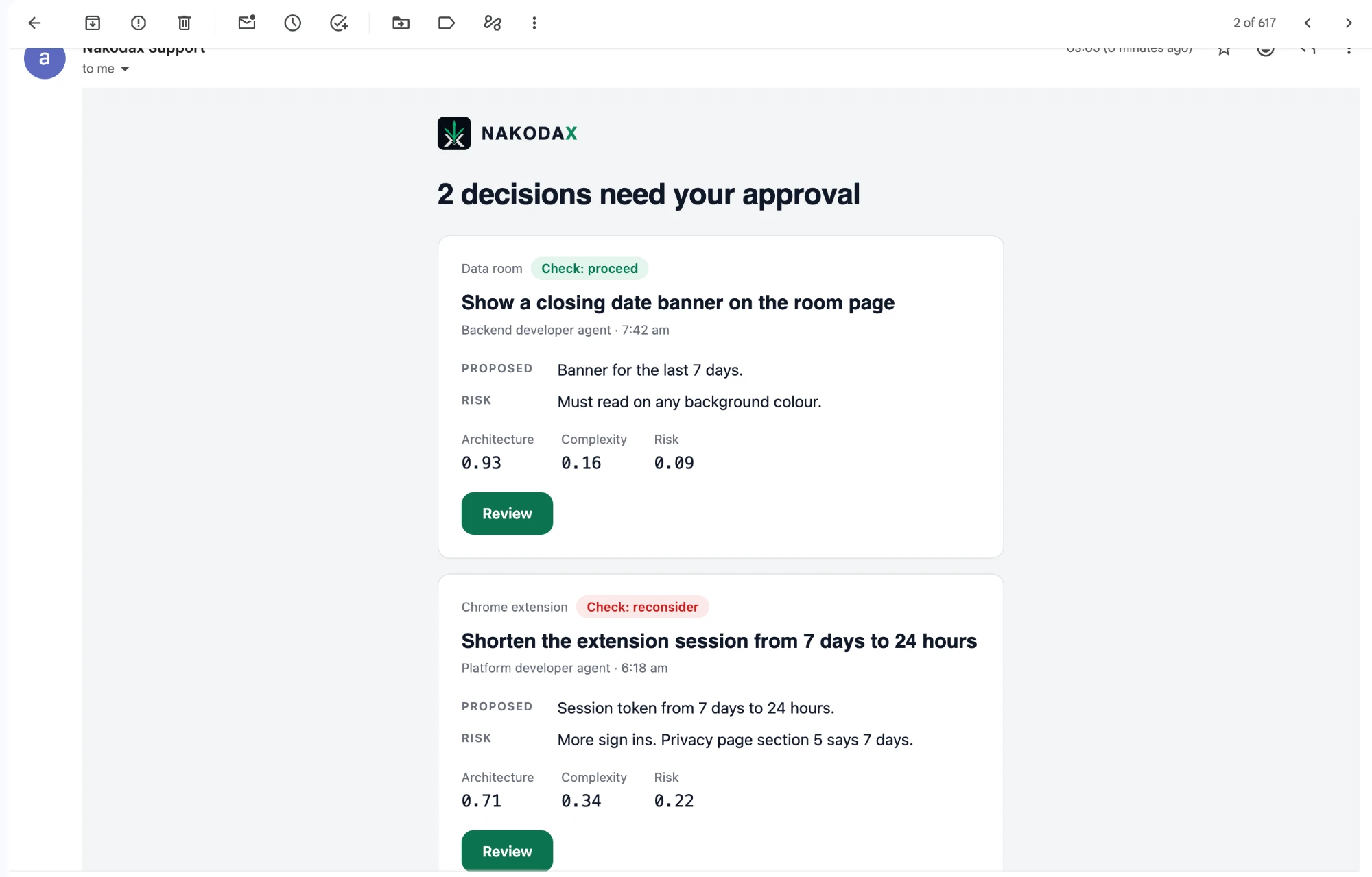
I still use Claude and Cursor for development. The difference is that decisions are summarised back to me in a box for approval. In that box I see:
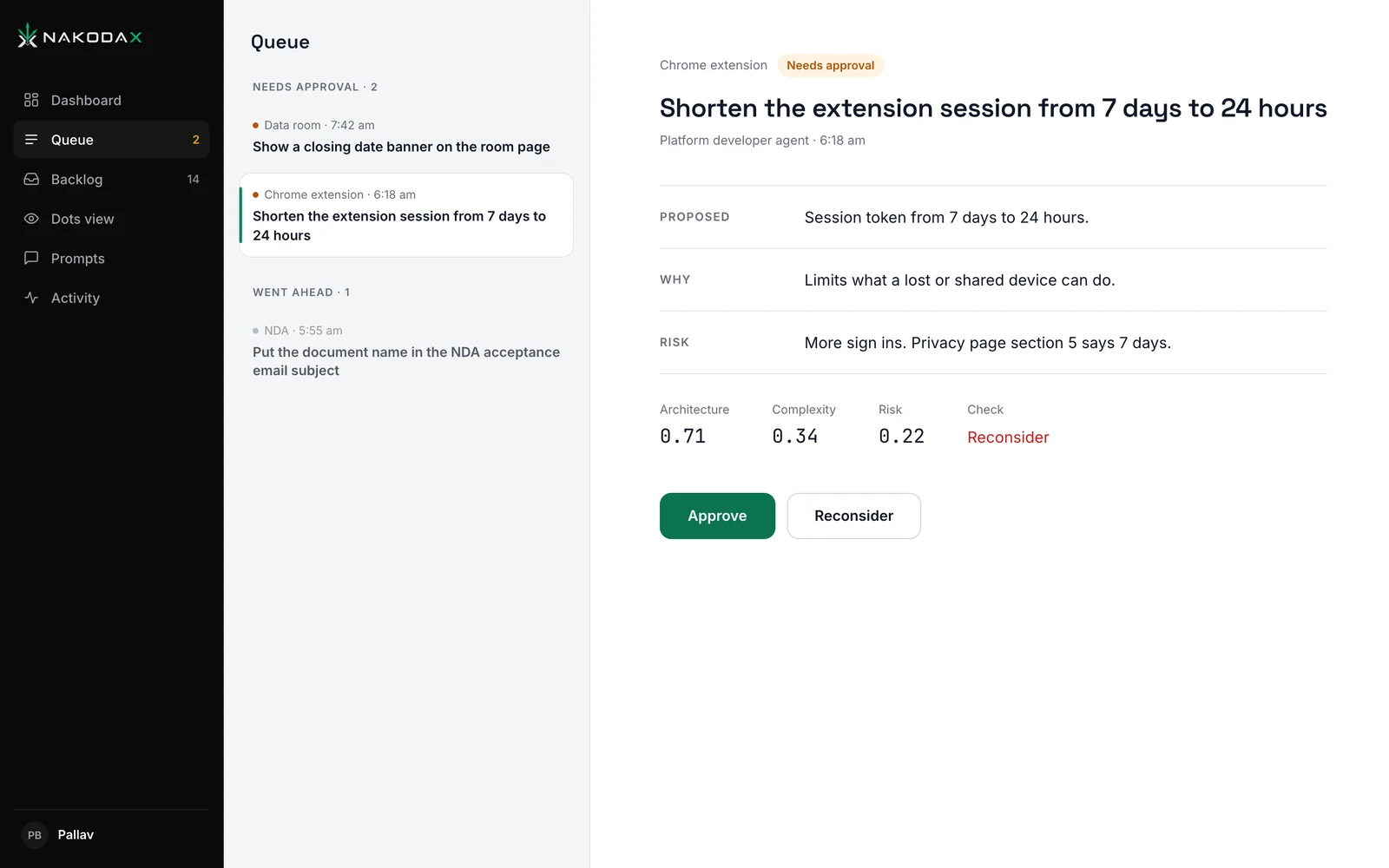
The summary reaches me by email. The email links to a dashboard where I approve or change each call, and my decision is recorded back in Dots.
This gives me visibility without having to supervise every line of code. The goal is not to slow development down. It is to keep important architectural and product decisions visible and accountable.
I believe we are moving towards multiple specialised agents working together instead of one assistant doing everything. Some will build, others will review, test, monitor and evaluate decisions. Humans stay in charge of direction, judgment and accountability.
For me it comes down to four things:
This is not about removing developers. It is about giving developers more leverage while keeping engineering judgment at the centre.
I intend to open source this work, including the workflows and the decision process, once I have cleaned up the remaining work on NakodaX. I would love to see how other teams use it.
One thought I keep coming back to. We have spent years teaching AI to write code. Perhaps it is time to teach our AI developers how to think about the decisions behind that code.
What is your experience with AI driven development? Are you confident in the decisions your coding agents make, or are you still reviewing code without enough visibility into why it was written that way?
NakodaX | Building with intelligence. Protecting what matters.
Start a free trial, or tell us what you share and with whom, and we will show you how NakodaX handles it.
New to NakodaX? Watch the overview
What happens to your sensitive business information after you share it? NakodaX helps businesses protect their documents, their data and their source code, even after they leave your system.
Watch the video (1:57)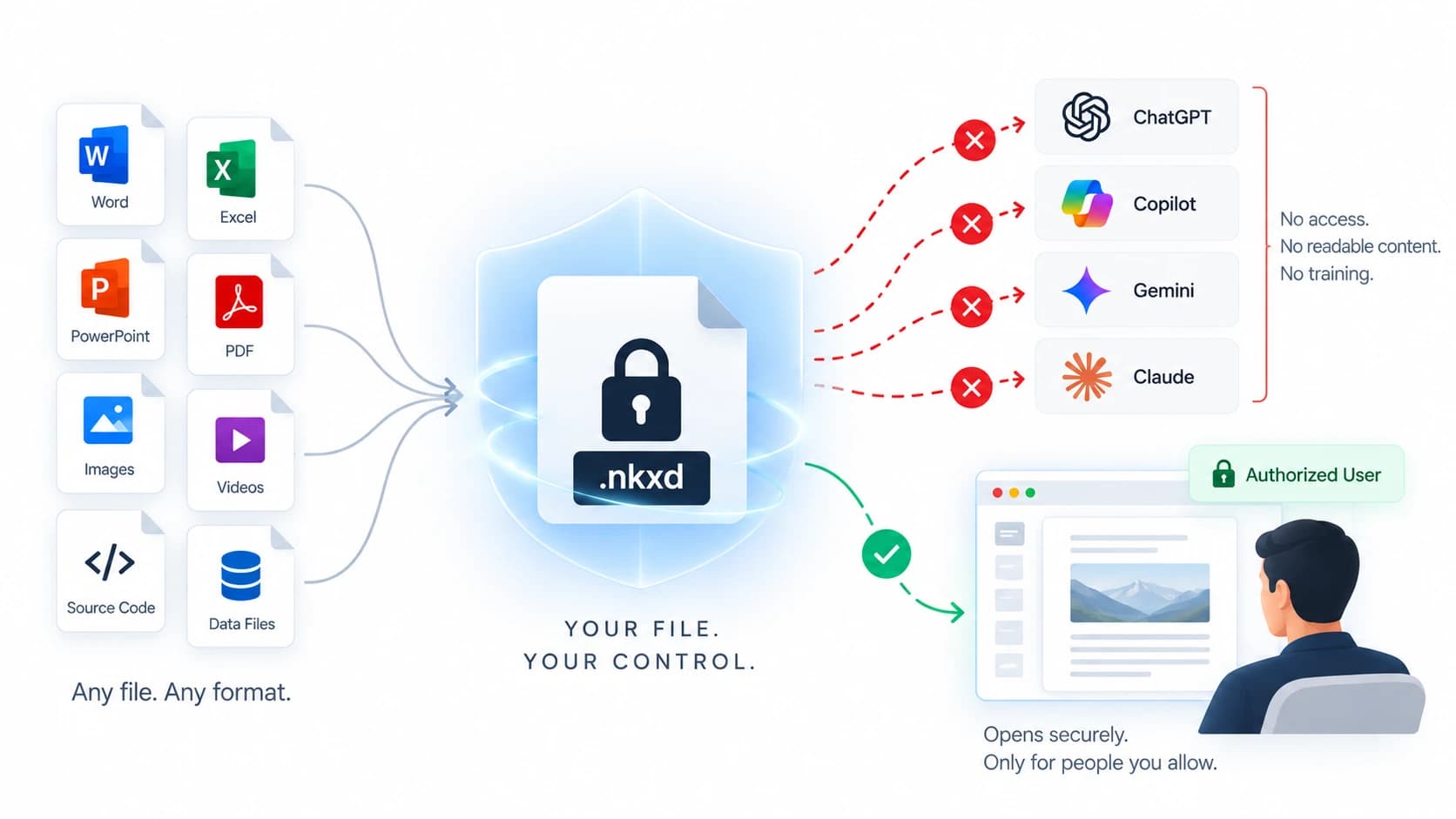
Perspective · 3 min read
Protected documents, data files and code releases give ChatGPT or Copilot nothing readable. Here is how each works, and what a screenshot can still do.
September 4, 2026
Perspective · 2 min read
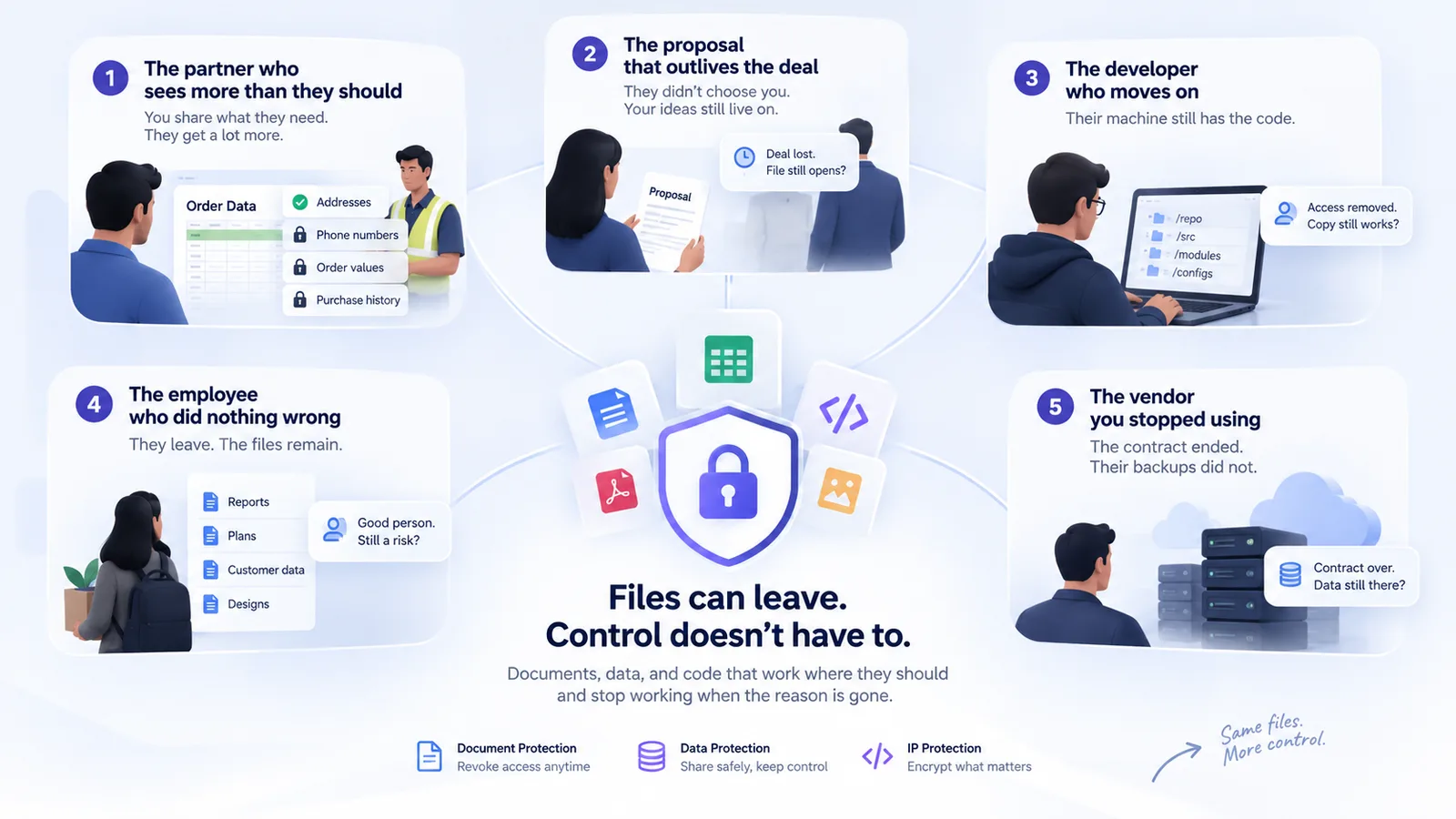
Leaks are rarely about bad people. Here are five normal situations where a good team loses control of files, and what NakodaX changes in each.
September 13, 2026

Perspective · 5 min read
Traditional security protects systems. But who protects your information after you share it?
October 23, 2026