
NakodaX
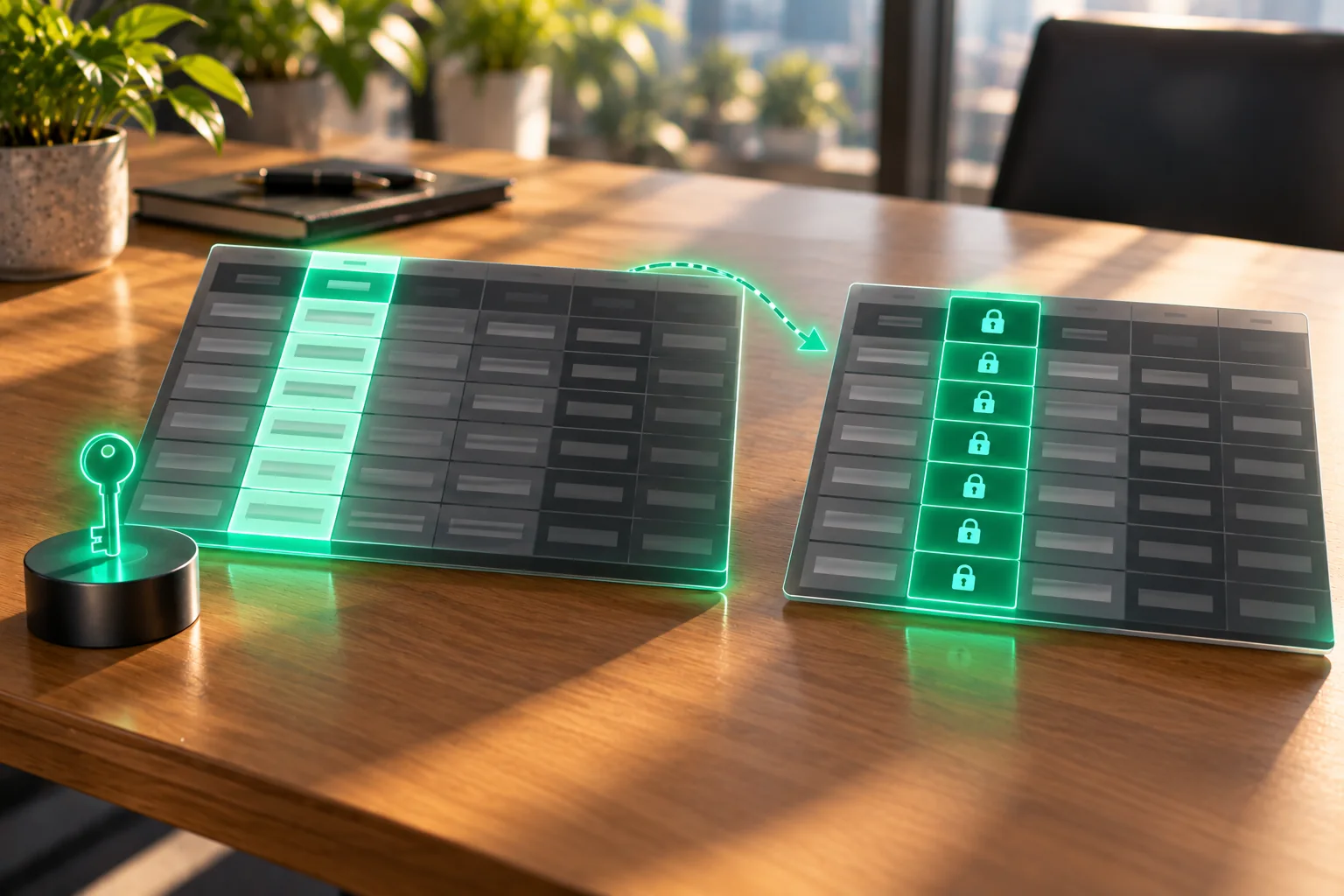
A data table with one column lit green sends a copy along a green dashed arrow to a second table where that column is replaced by locked tiles, with a glowing key standing beside the first table.

Situations· Data Protection

How do you give a vendor realistic test data without the real customer values?

Give a test or analytics team a file that works in their tools, with the sensitive columns sealed.

What changes

The sensitive columns are sealed with their format kept. The team gets a file of the same shape whose sealed values pass the format checks, and only a licence holder can unseal them.

In short

Test and analytics vendors often get real customer data, because invented values fail format checks. Seal the sensitive columns instead. The values become encrypted tokens of the same length and character type, so the file works in their tools. Only a licence holder can unseal them.

What happens today

A bank is replacing its loan system, and an outside team tests the new one. The system checks that an ID number has a set length, that an account number follows a set pattern and that a name field is not empty. Invented values fail those checks, and building a realistic set by hand takes weeks.

So the team asks for an extract of real customers. A few hundred thousand rows are prepared with names, ID numbers and account numbers in them, and sent by secure transfer.

How the leak happens

The team needs the shape of the data more than the values, but the only realistic file they can get is the real one. The extract then sits in test environments, on laptops and in shared folders, which are looser than production.

It is kept after the testing ends, and you cannot see who opened it.

What it costs you

Real customer identity data sits in places that were not built to hold it. A breach of a test environment is still a breach of customer data, and you may have to report it. The data also stays in use after the project ends, with no record of who read it.

What most organisations do today, and where it falls short

Inventing data by hand takes weeks and misses cases that real data would show. Replacing the values with random text fails the same format checks that invented data does. A deletion clause with a signed confirmation gives you a statement and no way to check it is true.

How NakodaX changes this

You choose the sensitive columns for the test team’s view: names, ID numbers and account numbers. Each is sealed, which replaces the value in place with an encrypted token. With the format kept, the token has the same length and character type as the original, so the system’s format checks still pass. The file keeps its shape, column order and row count, so the team tests against data that behaves like the real thing.

The team opens the file in its own tools and works with the other columns, and never reads the sealed ones. A holder of the licence can unseal the values, and a vendor without it cannot. A column the team does not need at all can be left out of the file instead.

The team has its own licence with an end date. When testing ends, you end the licence and NakodaX stops releasing the key. Every read is recorded. NakodaX does not store the data: it moves from your systems to the team’s.

What NakodaX does not do

Sealing with the format kept runs through the Python library, so check that your pipeline can use it. A team that already opened a file keeps what it opened, and ending the licence does not reach it. You choose which columns to seal, and NakodaX does not check whether the remaining columns could identify a person. The team needs a licence key and the NakodaX library, or the reader in the console.

What changes

The sensitive columns are sealed with their format kept. The team gets a file of the same shape whose sealed values pass the format checks, and only a licence holder can unseal them.

Answers

Related questions

How do I give a vendor realistic test data without real values?
Seal the sensitive columns with the format kept. The values become encrypted tokens of the same length and character type, so the file passes format checks and the vendor never reads the real values.
Who can read the sealed values?
A holder of the licence can unseal them. A vendor without the licence cannot.
Does the file change shape?
No. The columns, their order and the row count stay as they are. Only the sealed values change.

This one, or one very like it

Data protection. Start where the problem actually is.